Extreme cooling enables survival in extreme heat

Extreme cooling enables survival in extreme heat
Feehan, J. M.; Bitter, M. C.; Lowry, D.; Sharkey, T. D.; Rhee, S. Y.
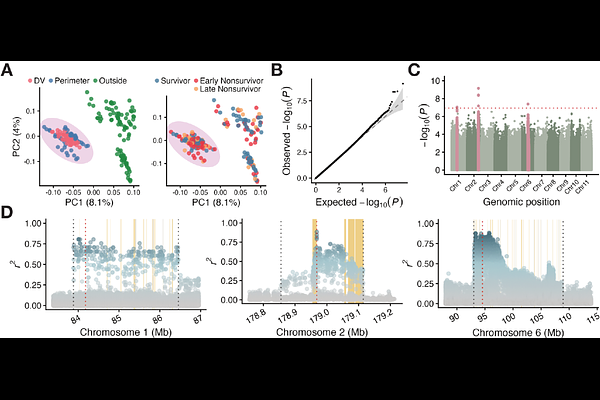
AbstractComplex, multicellular extremophiles face intense challenges in coordinating their cells, tissues, and organs to function in harsh environments. Tidestromia oblongifolia is a desert plant that thrives in Death Valley, where air temperatures exceed 50{degrees}C. Using natural collections of T. oblongifolia seed, we identified individuals that survive in daily air temperature regimens at the eukaryotic upper thermal limit of 60{degrees}C. Genome-wide association testing revealed genetic variation for survival in extreme heat, and transcriptomics identified pathways regulating physiological cooling. High-throughput infrared imaging showed that survival was enabled by extreme leaf cooling, a physiological mechanism not previously reported in a thermophilic organism. These discoveries provide insights into mechanisms of extreme heat adaptation in a complex organism that could be leveraged to engineer heat-resilient crops.