The spruce bark beetle Ips typographus transmits mutualistic fungi in mandibular mycetangia

The spruce bark beetle Ips typographus transmits mutualistic fungi in mandibular mycetangia
Lehenberger, M.; Grabe, V.; Kandasamy, D.; Gentsch, N.; Au, C.; Banos Quintana, A. P.; Schebeck, M.; Kaltenpoth, M.; Gershenzon, J.
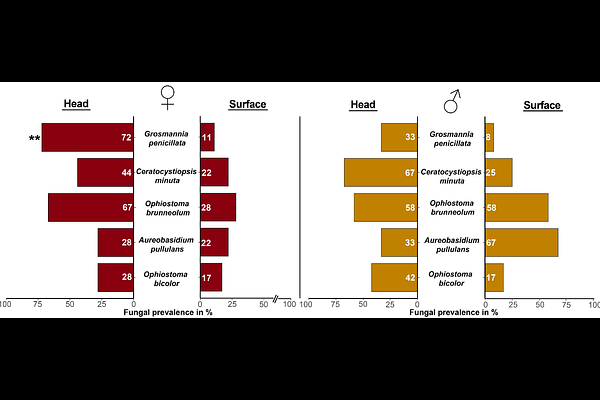
AbstractInsects associated with mutualistic microbes often possess structures specialized for microbial transport that ensure the maintenance of these symbioses. Called mycetangia, these structures have evolved in numerous bark beetle species facilitating fungal transport to new host trees. The Eurasian spruce bark beetle Ips typographus is associated with several filamentous ascomycetes that may provide beetles with nutrition or help overcome tree defenses. I. typographus has been believed to vector its fungal symbionts mostly on the exoskeleton, but exact mechanisms of fungal transmission are unknown. Here, we report the discovery of a mandibular mycetangium in I. typographus that enables the transmission of symbiotic fungi. Extensive fungal isolation from I. typographus heads suggested the presence of a mycetangium while micro-computed tomography and histological analyses revealed a mycetangium close to the mandibles. Strikingly, we identified these fungus-carrying structures in both sexes of I. typographus and in the congeneric species I. acuminatus, and I. duplicatus, although mandibular mycetangia have been thought to be rare in Ips bark beetles. Moreover, mycetangia in male beetles in general were hardly reported in bark beetles before. The occurrence of mycetangia in Ips species highlights the important role mutualistic fungi play in the natural history of these bark beetles.