Molecular-level analysis of serum IgG repertoires in COVID-19-vaccinated people with cystic fibrosis identifies abundant convergent antibodies

Molecular-level analysis of serum IgG repertoires in COVID-19-vaccinated people with cystic fibrosis identifies abundant convergent antibodies
Lee, J.; Ionov, S.; Connor, R. I.; Curtis, N. C.; Shin, S. M.; Kim, B. H.; Koehne, N.; Park, J.-Y.; Ashare, A.; Wright, P. F.
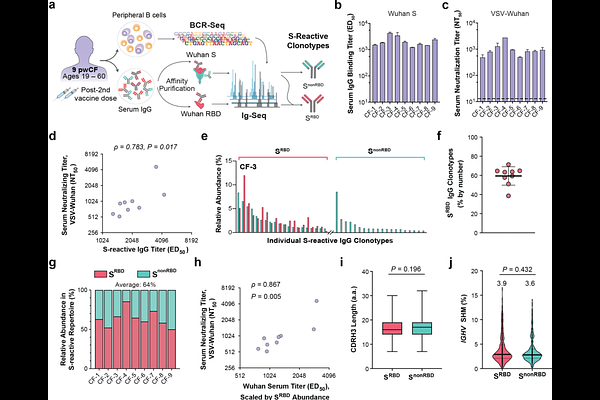
AbstractBackground: People with cystic fibrosis (pwCF) are at increased risk of severe disease following respiratory viral infections including influenza and respiratory syncytial virus, and were therefore given priority for COVID-19 vaccination. Retrospective epidemiological data have revealed a lower incidence of SARS-CoV-2 infection and a reduced fatality rate among pwCF than in the general population, possibly from the stringent infection control measures and early adoption of protective behaviors. Despite several reports of adequate binding and neutralizing titers after vaccination, the molecular features of vaccine-elicited serum antibody repertoires in pwCF remain unknown. Methods: We performed high-resolution proteomic analysis of serum IgG, combined with next-generation sequencing of B cells, to quantitatively profile Spike (S)-reactive serological repertoires from nine infection-naive pwCF after two doses of COVID-19 mRNA vaccine. We recombinantly expressed 20 IgG clonotypes from 6 pwCF as monoclonal antibodies (mAbs) and measured their binding and neutralization against vaccine-strain and variant viruses. Results: All donors mounted strong binding and neutralizing titers to vaccine-strain virus. Ig-Seq revealed diverse serum repertoires in all vaccinees, with antibodies targeting the receptor-binding domain (RBD) comprising 64% of each circulating repertoire by abundance. Several serum IgG clonotypes identified across our cohort shared identical or similar IGHV and CDRH3 amino acid sequences with serum IgG from other pwCF or S-reactive mAbs isolated from non-CF individuals. These convergent antibodies made up 14.6% of the anti-S repertoires in our cohort, reaching 24.8% in one pwCF. Convergent antibodies tended to be RBD-reactive and enriched in specific IGHV; surprisingly, a higher abundance of convergent antibodies in serum correlated with a lower breadth of serum neutralization. All 20 mAbs bound Wuhan S with high affinity (EC50 < 10 nM), and only RBD-reactive mAbs conferred neutralization to vaccine or variant pseudovirus. While most mAbs bound both the B.1.617.2 (Delta, 17/20) and B.1.1.529 (Omicron, 12/20) strains, convergent mAbs were less likely to bind either variant. Conclusions: Post-vaccine serum IgG repertoires in pwCF are dominated by RBD-focused, high-affinity antibodies and include a substantial convergent component shared with non-CF vaccinees. These findings demonstrate that pwCF mount antibody responses comparable to the general population, and a large group of convergent antibodies may contribute to strain-specific rather than cross-variant immunity.