HuR inhibition attenuates hypertension and fibrosis in chronic kidney disease

HuR inhibition attenuates hypertension and fibrosis in chronic kidney disease
Zhuang, L.; Wang, Z.; Fu, Z.; Mookherjee, S.; Symons, J. D.; Aube, J.; Wu, X.; Xu, L.; Huang, Y.
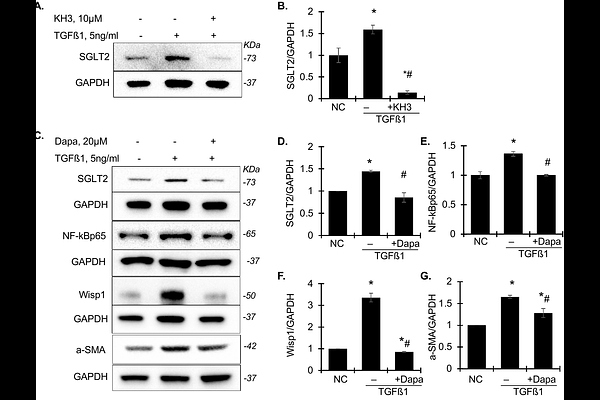
AbstractBackground: Elevated RNA-binding protein HuR has been reported in patients with chronic kidney disease (CKD), but its specific pathogenic role remains unclear. Here, we investigated HuR involvement in progressive CKD induced by deoxycorticosterone acetate (DOCA) plus angiotensin II (Ang II) in mice and evaluated the therapeutic efficacy and mechanisms of the HuR inhibitor KH3. Methods: Adult male mice underwent uninephrectomy and were subjected to DOCA + Ang II infusion with 1% NaCl in drinking water. Mice were then treated with KH3 or vehicle for 3 weeks. Control mice received saline injections without DOCA and Ang II infusion. Results: DOCA + Ang II infusion markedly increased HuR expression in circulating exosomes and kidney tissues, which was attenuated by KH3. KH3 halted the progression of albuminuria and improved renal function, and reduced kidney hypertrophy and glomerular and tubulointerstitial fibrosis compared with untreated DOCA + Ang II mice. These improvements were associated with reduced podocyte and tubular injury. KH3 also decreased renal macrophage infiltration and suppressed NF- {kappa}Bp65, Nox2, AKT phosphorylation, TGF-{beta}1, and Wisp1, consistent with reduced inflammation, oxidative stress, and fibrosis. In addition, KH3 partially lowered arterial blood pressure in DOCA + Ang II-infused mice, an effect that may involve suppression of SGLT2-associated profibrotic vascular responses, as supported by studies in cultured VSMCs and mesenteric resistance arteries. Conclusions: HuR is upregulated in DOCA + Ang II-induced renal and vascular injury and contributes to hypertensive, inflammatory, oxidative, and fibrotic responses in CKD. Pharmacologic inhibition of HuR-RNA interactions represents a promising therapeutic strategy for CKD.