Interpretable AI driven materiomics to decode microenvironmental cues for stem cell immunomodulation

Interpretable AI driven materiomics to decode microenvironmental cues for stem cell immunomodulation
Pan, C.; He, Y.; Chen, K.; Wang, Q.; Wang, X.; Zhang, Y.; An, C.; Wang, H.
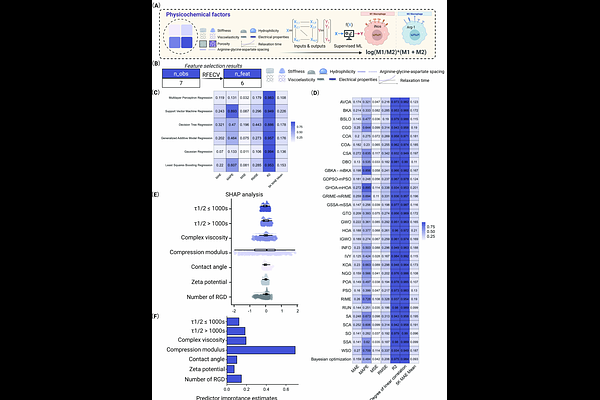
AbstractHydrogels that mimic the extracellular matrix can create a microenvironment with various physicochemical cues, which significantly influence stem cell fate with particular emphasis on their immunoregulatory and pro-regenerative functions. However, elucidating how biomaterial cues regulate cell fate is invariably confronted with complexities such as multi-parameter interactions and nonlinear relationships, thereby necessitating a large number of samples and consuming substantial labor and resources. This research introduces a materiomics platform that utilizes high-throughput data and artificial intelligence for the systematic evaluation and accurate prediction of optimal stem cell niche features, aiming to boost the immunomodulatory functions of mesenchymal stem cells (MSC). Specifically, binary hydrogels composed of methacrylated alginate and gelatin (AMGM) were employed, allowing the establishment of a comprehensive materiomics database with seven critical physicochemical cues as indicators of MSC immunomodulatory capacity in mediating macrophage polarization. Machine learning algorithms based on this materiomics database not only successfully predicted the most effective hydrogel formulations to promote stem cells immunoregulatory efficacy but also revealed that matrix stiffness is the most dominant environmental cue mediating macrophage phenotype. In summary, this study demonstrates the utility of artificial intelligence in identifying core microenvironment cues and establishes a data-driven research paradigm for investigating microenvironmental signals.