Mature Citrus Leaves Undergo Coordinated Photosynthetic Downregulation to Support Flush-Driven Carbon and Nitrogen Sink Demand

Mature Citrus Leaves Undergo Coordinated Photosynthetic Downregulation to Support Flush-Driven Carbon and Nitrogen Sink Demand
Hussain, S. B.; Meng, Q.; Li, S.; Wang, Y.; Vincent, C. I.
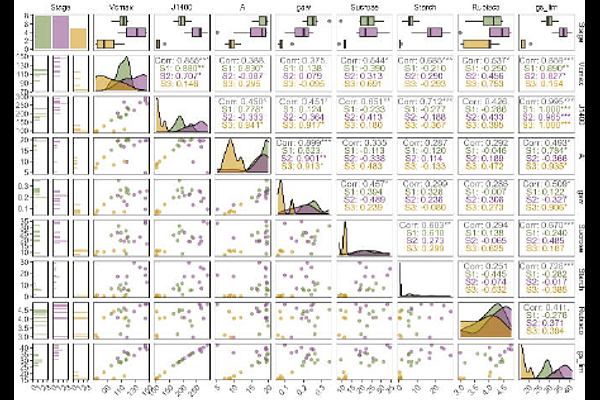
AbstractThe source-sink attenuation hypothesis suggests that plants regulate carbon fixation in response to fluctuations in sink demands. Many evergreen trees exhibit flushing growth patterns, where new shoot development generates a strong, transient demand for both carbon and nitrogen that may influence the function of mature leaves. This study examined the source-sink attenuation hypothesis in the context of vegetative sink growth by investigating the photosynthetic capacity and nitrogen dynamics in mature citrus leaves across three stages of flush development. In contrast to expectations, photosynthesis declined as flush growth progressed. Early flush initiation induced stomatal limitation in mature leaves, whereas as sink demand from further shoot growth continued carboxylation capacity and Rubisco abundance declined, despite relatively stable total leaf nitrogen. These results suggest that mature leaves undergo selective protein retooling under prolonged sink demand, constraining CO2 fixation while maintaining C export. Overall, this study revealed that under strong combined N and C sink demands, mature citrus leaves function primarily as regulated carbon conduits rather than dynamically upregulating photosynthesis, providing new insight into source-sink coordination in woody perennial species.