The impact of serial translocations on the genetic diversity of Anegada iguanas (Cyclura pinguis) in the British Virgin Islands

The impact of serial translocations on the genetic diversity of Anegada iguanas (Cyclura pinguis) in the British Virgin Islands
Colosimo, G.; Dykema, Z.; Welch, M. E.; Gentile, G.; Perry, G.; Harlow, Z.; Gerber, G. P.
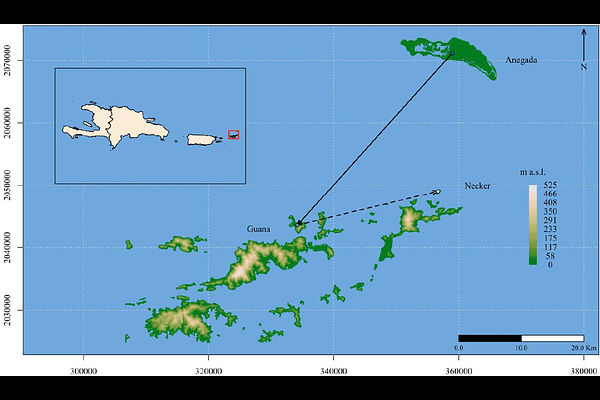
AbstractAnimal translocations are becoming increasingly popular as a tool for conservationists. Demographic factors can be crucial determinants dictating translocation viability in the short term. Translocated populations pass through artificial bottlenecks and can suffer from founder effects. Reduction in genetic variation relative to their source populations is likely, limiting their adaptive potential. Founder events can increase frequencies of deleterious alleles due to elevated rates of inbreeding and inbreeding depression. Here, we describe the effects of human-driven, serial population translocations on the genetic diversity of critically endangered Anegada iguanas (Cyclura pinguis) in the British Virgin Islands. Though founding populations were extremely small (N=8, N=4), the census sizes of translocated iguana populations increased dramatically over the first twenty years. This implies that these translocations were successful from a demographic perspective despite the small number of animals used, indicating a genetic paradox. To quantify genetic signatures in these bottlenecked populations, blood samples were collected from the source population and two translocated populations and genotyped at 21 microsatellite loci. We found that allele frequencies in translocated populations differed significantly from those of the source, with the translocated populations having less genetic diversity. However, common methods for estimating presence of genetic bottlenecks were non-significant. Estimates of internal relatedness by age class suggest that inbreeding depression may be elevated after translocation, likely reflecting the small initial population sizes associated with these translocation events. Anecdotally, our work shows that translocations may result in subtle genetic erosion that has long-term population viability impacts, even when census size indicates success.