Large increases in resistance training volume do not impair skeletal muscle hypertrophy or anabolic-catabolic molecular signalling in trained individuals

Large increases in resistance training volume do not impair skeletal muscle hypertrophy or anabolic-catabolic molecular signalling in trained individuals
Camargo, J. B. B.; Bittencourt, D.; Michel, J. M.; Silva, D. G.; Bergamasco, J. G. A.; Tiede, D. R.; Lewis, D.; Nacafucasaco, E. T. d. A.; Ferrari, O.; Melo, A. C. C.; Iasulaitis, M.; Rebelato, M.; Roberts, M. D.; Libardi, C. A.
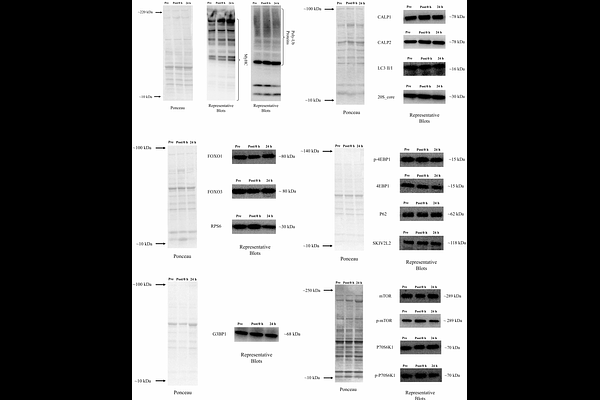
AbstractSkeletal muscle hypertrophy results from the integrated regulation of anabolic and proteolytic processes in response to mechanical loading. Although increases in resistance training (RT) volume are used to increase mechanical stress, it remains uncertain whether large and abrupt volume progressions could exceed muscle adaptive capacity by disrupting the balance between anabolic and catabolic signaling. The present study investigated whether a large increase in weekly RT volume (+120%) leads to impaired hypertrophic outcomes and intracellular regulatory responses compared with a modest increase (+20%). Twenty-five resistance-trained men and women (18-35 years old) completed an 8-week randomized, single-blind, within-subject unilateral intervention. Each participant trained both legs twice weekly, with one leg assigned to the large (VOL120) and the contralateral leg to the modest (VOL20) weekly volume progressions relative to habitual training volume. Vastus lateralis muscle cross-sectional area (mCSA) was assessed by ultrasonography before and after training. Muscle biopsies were obtained at baseline, post-intervention, and 24 h after the last session to quantify muscle fiber cross-sectional area (fCSA), satellite cell myonuclear content, and anabolic/catabolic signaling markers. Both protocols induced increases in mCSA over time (p<0.001), with no protocol vs. time interaction. No significant effects were observed for fCSA nor satellite cell number or myonuclear content. Additionally, molecular responses related to translational regulation and protein degradation were largely similar between protocols. Collectively, these data indicate that a large, abrupt increase in weekly set volume does not impair hypertrophic adaptations or meaningfully alter the anabolic-catabolic signaling profile in resistance-trained individuals.