Energy and heterogeneity shape bird taxonomic and functional gamma-diversity patterns across landscapes in Finland

Energy and heterogeneity shape bird taxonomic and functional gamma-diversity patterns across landscapes in Finland
Cours, J.; Lehikoinen, A.; Burgas, D.; Heikkinen, R. K.; Elo, M.; Versluijs, M.; Duflot, R.
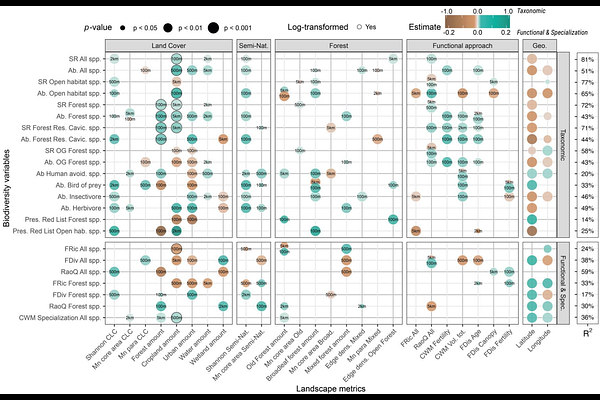
AbstractAim: Our aim was to study the effects of energy availability and landscape habitat heterogeneity on bird taxonomic and functional gamma-diversity and propose conservation guidelines based on the results. Location: Southern and Central Finland. Time Period: 2009--2020. Major Taxa Studied: Birds. Methods: We derived biodiversity variables from bird monitoring line transects to assess the effects of latitude, longitude, and landscape composition, configuration, and heterogeneity at multiple spatial scales: 100, 500, 2,000, and 5,000 m. We tested the effects of these landscape metrics on the total community, bird ecological guilds (species richness and abundance), functional diversity, and overall species specialization index. Results: We found clear evidence supporting a positive effect of energy (latitude and soil fertility) and habitat amount on bird abundances. Our results also revealed a northward increasing trend in functional diversity and species specialization. Habitat heterogeneity positively affected both bird abundance and species richness. Heterogeneity of land cover types was shown to promote abundances, while functional measure of landscape heterogeneity was positively connected to species richness. Land use with high anthropogenic activities, such as urban areas and cropland, negatively affected forest specialists and species sensitive to human activities. Main Conclusions: Energy and habitat heterogeneity and amount are major mutually nonexclusive factors shaping bird communities in Finnish landscapes. Nonetheless, certain land use types favour some guilds while excluding others (for example, urbanized areas or cropland favouring open area species while excluding old-growth forest specialists), showing that biodiversity conservation is a matter of specialized landscapes. Furthermore, different measures of landscape heterogeneity demonstrated positive relationships with the studied bird guilds, highlighting the consistency of the species-heterogeneity relationship.