Testosterone alleviates inflammation but increases the methacholine response in mice with allergic lung inflammation

Testosterone alleviates inflammation but increases the methacholine response in mice with allergic lung inflammation
Henry, C.; Boucher, M.; Rojas-Ruiz, A.; Camillari, L.; Gelina, L.; Beaulieu, M.-J.; Marsolais, D.; Joseph, V.; Bosse, Y.
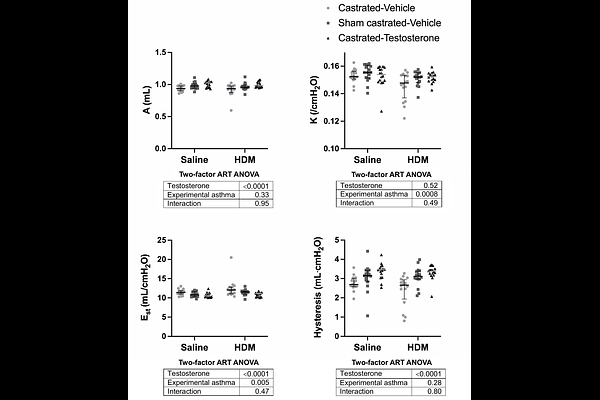
AbstractTestosterone seems protective against asthma, but the underlying mechanisms are uncertain. Herein, the effect of testosterone was investigated on several features of experimental asthma. Systemic testosterone was first altered to subphysiological, physiological, or supraphysiological levels in male BALB/c mice through orchiectomy and testosterone supplementation. Testosterone (0.25 mg/day/30 g of body weight) was delivered continuously during 20 days using an implanted pump. At day 10, each group was exposed intranasally to either saline or house dust mite (HDM) once daily for 10 consecutive days to induce allergic lung inflammation. The day after the last exposure, respiratory mechanics was measured at baseline and in response to nebulized methacholine. Bronchoalveolar lavages (BAL) and lung tissues were also collected to quantify inflammation. Baseline respiratory mechanics were altered in mice with subphysiological levels of testosterone, with signs of small airway narrowing heterogeneity and closure. Testosterone drastically inhibited the HDM-induced inflammation. Yet, testosterone also increased the response to methacholine, as well as hysteresis, which are both indicators of enhanced airway smooth muscle activity. While it suggests that testosterone increases the contractility of the smooth muscle, it simultaneously and markedly inhibits inflammation. Explanations as to how these outcomes may lead to protection in asthma are discussed.