First report on Chicken Pediculosis in Modern Battery-Cage Layer Farms in Bangladesh: Behavioral, Pathological and Production Performance Impacts

First report on Chicken Pediculosis in Modern Battery-Cage Layer Farms in Bangladesh: Behavioral, Pathological and Production Performance Impacts
Rabbi, M. R. R.; Safowan, M.; Miti, A. A.; Salafi, M. A. M.; Rahman, D. M. Z.
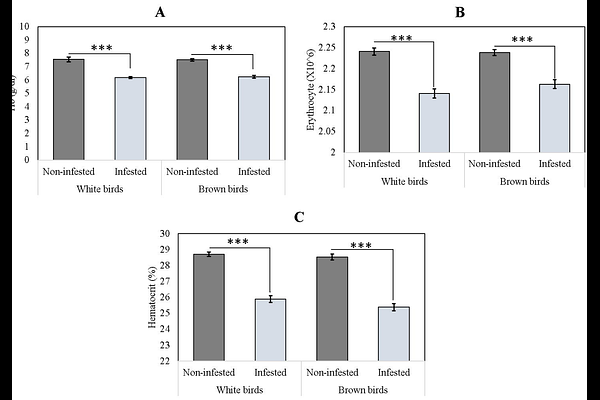
AbstractThe recent shift in Bangladesh from tradition backyard rearing system to modern commercial layer farming has made the birds immune to infectious diseases. Pediculosis, however, continues to pose a challenge in modern production system due to its invasive nature, often going unnoticed and neglected as it is typically non-lethal, yet capable of causing significant production losses. Lice infestation is a persistent threat in poultry production; however, its implications in battery-caged commercial layer hens in Bangladesh remain insufficiently characterized. The study aimed to identify the causative louse species and evaluate its associations with clinical pathology, hematological alteration and productive performance in 30 white-feathered (15 infested + 15 non-infested) and 30 brown-feathered (15 infested + 15 non-infested) laying birds from two commercial farms in Tangail. Morphological characterization confirmed the parasite as Menacanthus stamineus, distinguished by a dorsoventrally flattened body, parabolicallly rounded head wider than long, concealed club-shaped antennae, an oblong-oval abdomen with fine setae and three pairs of short legs each bearing paired claws. Infested birds exhibited consistent clinical pathology, including pale combs, petechial hemorrhages around the vent, severe feather damage with alopecic and exudative areas and incidence of irregular and broken-shelled eggs. Production performance analysis revealed significant reduction in hen-day egg production, egg weight, and feed intake, accompanied by significantly increased feed conversion ratios. Hematological evaluation demonstrated significantly reduced hemoglobin concentration, hematocrit and erythrocyte counts in infested hens, indicating mild anemia and compromised oxygen-carrying capacity. Collectively, pediculosis was strongly associated with lice-induced self-inflicted injury and cannibalism, systemic physiological stress, impaired erythropoiesis, reduced production efficiency and compromised welfare in caged laying hens. To best of our knowledge, it was the first integrative reports from Bangladesh documenting M. stramineus infestation in battery-caged commercial layer system with concurrent evidence of hematological disruption and measurable productivity losses, underscoring its epidemiological and economic significance and urgent need for targeted, evidence-based ectoparasite control strategies.