Synbiotic Yogurt with Lactobacillus plantarum and Stevia rebaudiana: Physicochemical, Microbiological, and Functional Evaluation

Synbiotic Yogurt with Lactobacillus plantarum and Stevia rebaudiana: Physicochemical, Microbiological, and Functional Evaluation
Dhakal, P.; Lama, S.; Chaudhary, P.
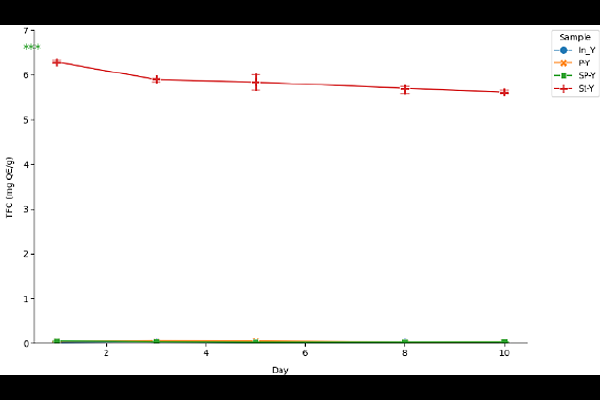
AbstractFunctional dairy products are increasingly recognized for their ability to provide both essential nutrition and additional health benefits. This study aimed to develop and evaluate a synbiotic yogurt enriched with Lactobacillus plantarum as a probiotic and Stevia rebaudiana extract (1% w/v) as a prebiotic source. Thirteen lactic acid bacteria (LAB) strains were isolated from fermented dairy and vegetable samples and evaluated for probiotic potential through tests for acid and bile tolerance, hydrophobicity, aggregation abilities, and pathogen co-aggregation. Isolate PG1 (Lactobacillus plantarum) demonstrated the highest prebiotic growth stimulation index (49%) in the presence of stevia extract and was selected for yogurt formulation. Yogurt samples were prepared and stored at 4C for 10 days. Physicochemical properties (pH, titratable acidity, and protein content), microbiological viability, total phenolic and flavonoid content, antioxidant activity (DPPH assay), and sensory attributes were monitored. The synbiotic yogurt (St-Y) showed enhanced functional properties, with a total phenolic content of 16.67 microgram GAE/g, a flavonoid content of6.28 microgram QE/g, and 57.84% antioxidant activity. Additionally, it showed improved protein content and superior sensory scores compared to control samples. These findings suggest that S. rebaudiana fortified probiotic yogurt can serve as a nutritious, antioxidant-rich, and sensory-acceptable functional dairy product.