Predicting post-TEVAR endoleaks: a pre-operative hemodynamic risk factor from patient-specific Fluid-Structure Interaction simulations

Predicting post-TEVAR endoleaks: a pre-operative hemodynamic risk factor from patient-specific Fluid-Structure Interaction simulations
Duca, F.; Tavarone, S.; Domanin, M.; Bissacco, D.; Trimarchi, S.; Vergara, C.; Migliavacca, F.
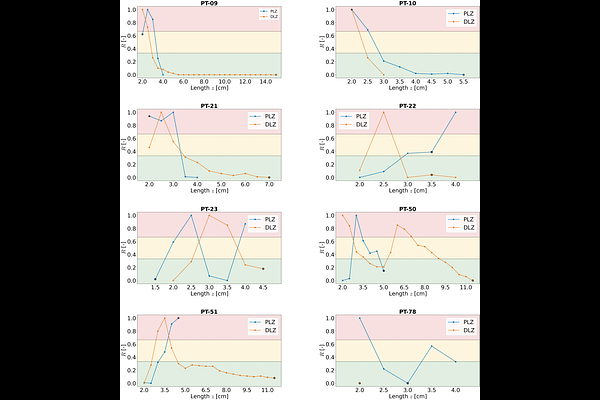
AbstractThoracic Endovascular Aortic Repair (TEVAR) is a minimally invasive procedure for the treatment of thoracic aortic pathologies, such as Thoracic Aortic Aneurysm (TAA). Computational simulations can provide valuable insights into TEVAR outcomes and complications prior to surgery, making them a useful tool in the procedural planning. In this work, Fluid-Structure Interaction (FSI) computational simulations are carried out in ten pre-TEVAR patient-specific TAA cases, for which post-TEVAR outcomes are known, to quantify the hemodynamic drag forces acting on the aortic wall. Based on these results, this study proposes a new risk factor R to predict the occurrence of type I and III endoleaks. The patient cohort is divided in a calibration set, used to associate specific R values with three different risk levels, and a validation set, to test the risk factor efficacy. Based on the risk factor values obtained for the calibration set, R [≤] 0.33 is associated with low risk of endoleak formation, 0.33 < R [≤] 0.67 with moderate risk, and R > 0.67 with high risk. Once it is applied to the validation set, the risk factor is able to predict the formation of a type Ia endoleak. The risk factor proposed in this work is capable of identifying all the endoleak cases analysed, as well as conditions known to increase the risk of TEVAR complications. This study represents a preliminary attempt to determine whether pre-TEVAR hemodynamics can effectively predict post-TEVAR complications and thereby aid clinicians in the pre-operative planning.