Placental invasion mismatch underlines pregnancy disorders and cancers

Placental invasion mismatch underlines pregnancy disorders and cancers
Li, X.; Chen, R.; Zhang, Y.; Sun, Y.; Du, W.; Yu, D.; Lu, Y.; Yang, Y.; Bi, X.; Yang, Y.; Zhu, J.; Sun, K.; Liang, J.; Jiang, L.; He, Y.; Sun, L.; Shen, J.; Kshitiz, ; Zhang, D.; Zhang, G.
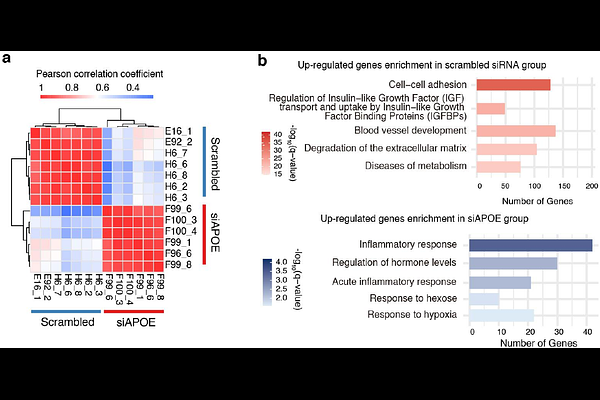
AbstractMammalian placentas vary dramatically in invasiveness, parallel aggressive cancers, and are dysregulated in pregnancy disorders, yet whether they share regulatory architecture remains unclear. We investigated single-cell transcriptomes of the maternal-fetal interface across nine mammals spanning all major placental morphotypes and integrated it with thirteen cancers and five pregnancy complications. A conserved cellular framework is deployed through three discrete regulatory programs: a cancer-like program in hemochorials, endothelial-cooperation program in endotheliochorials, and collagen-rich invasion-suppressing program in epitheliochorials. Aggressive cancers selectively converge on hemochorial program, and we functionally validated share invasion regulators including the VGLL3-TEAD1 interaction and APOE. Pregnancy disorders are partially, mismatched deployments of these programs; placental APOE knockdown in mice phenocopies preeclampsia with concurrent collapse of both M1/M2 macrophage programs. These findings unify placental diversity, cancer convergence, and obstetric disorders under a regulatory-mismatch principle, whereby evolved placental invasion programs becomes pathological when deployed outside their evolutionary context.