Loss of Vpr-driven TRAIL-R2 expression protects HIV-infected cells from non-canonical NK cell TRAIL attack

Loss of Vpr-driven TRAIL-R2 expression protects HIV-infected cells from non-canonical NK cell TRAIL attack
Grasberger, P. E.; Sondrini, A. R.; Glidden, N.; Modica, A.; Pushlar, N.; Bedir, S.; Bromfield, T.; Gentling, S.; Cheema, K.; Kucukural, A.; Ozdemir, M.; Zapp, M.; Bosque, A.; Leyre, L.; Shulkin, A.; Piechocka-Trocha, A.; Jones, R. B.; Clayton, K. L.
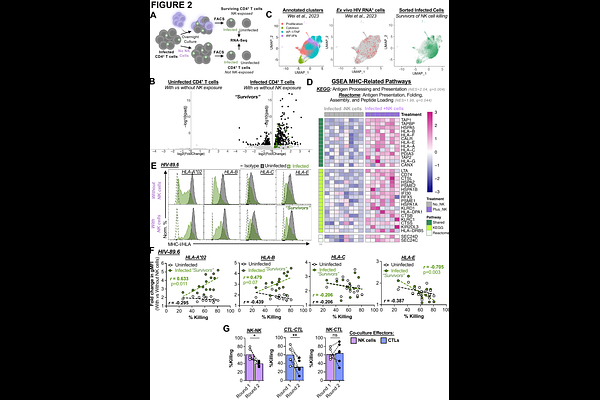
AbstractHIV escapes sterilizing immunity through a variety of mechanisms, including the downregulation of MHC-I expression by HIV Nef and Vpu to counteract CD8+ T cell responses. While reduced MHC-I expression would be expected to support targeting by NK cells, a subpopulation of infected CD4+ T cells consistently resists multiple rounds of NK cell natural and antibody-dependent cytotoxicity. Studies further reveal that the HIV accessory protein Vpr induces expression of TNFRSF10B (TRAIL-R2) in CD4+ T cells, with survivors of NK cell targeting exhibiting relatively higher MHC-I and weaker expression of TRAIL-R2. In fact, reverse TRAIL signaling in NK cells leads to the release of perforin and granzymes, a pathway limited when TRAIL-R2 expression is diminished. Thus, independent of canonical death receptor signaling, TRAIL-R2 serves as an activating ligand that augments NK cell killing. These observations demonstrate that through Vpr, HIV can regulate the TRAIL/TRAIL-R2 axis to control NK cell functionality.