Effects of different concentrations and combinations of antibiotics on the dynamics of intracellular transposition in Escherichia coli

Effects of different concentrations and combinations of antibiotics on the dynamics of intracellular transposition in Escherichia coli
Goodman, R. N.; Shore, E.; . Brouwer, M. S. M.; Nambala, P.; Feasey, N.; Langeland, N.; Moyo, S. J.; Singer, A.; Roberts, A. P.
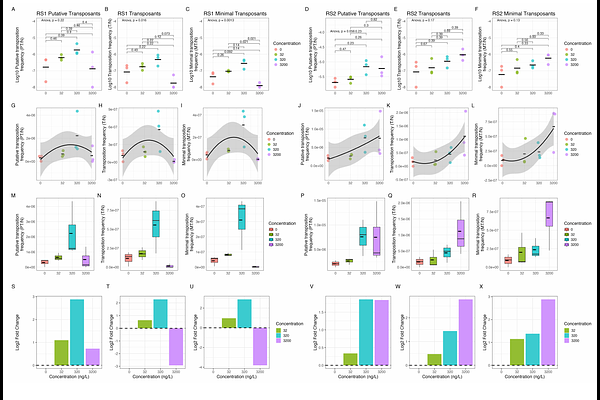
AbstractThe use of antimicrobial compounds in humans, animals and in agriculture leads to environmental antimicrobial contamination through domestic, industrial and agricultural wastewater. Efforts have been made to perform environmental risk assessments based on the potential of these compounds to select for antimicrobial resistance (AMR) at certain concentrations in bacteria. This has resulted in predicted no effect concentrations (PNEC) which determine the minimum thresholds required to select for resistance. However, the effects of these compounds on intracellular transposition within bacterial isolates, a major driver of AMR, have not been previously assessed. Here, we assess the effect of differing sub-inhibitory concentrations of the third-generation cephalosporin, ceftriaxone, on the rate of intracellular transposition in combination with colistin and kanamycin. Two Escherichia coli triple replicons systems (RS1 and RS2) were developed to assess this, each containing a chromosome, plasmid and entrapment vector. We show that sub-inhibitory concentrations of ceftriaxone exert hormetic effects on the intracellular transposition rate in RS1 and a steady linear increase in RS2. This defines a predicted no effect concentration for transposition (PNECT) for ceftriaxone as 320 ng/L in RS1 and 3200 ng/L in RS2. This provides a minimum threshold for the environmental impact of ceftriaxone on biological systems at the sub-cellular scale, which is applicable to industrial standards of waste management, where consideration of ecological impact is central.