An update to Allocating Time on Scientific Platforms in Outer Space using five cycles of JWST General Observer programs

An update to Allocating Time on Scientific Platforms in Outer Space using five cycles of JWST General Observer programs
Christopher Williams
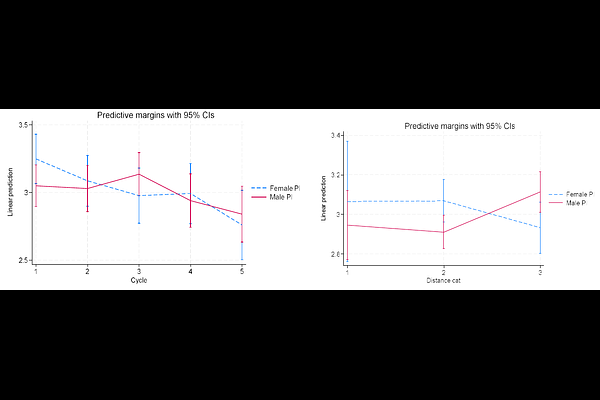
AbstractAllocating Time on Scientific Platforms in Outer Space (Williams, 2025 in Research Policy) explored time allocated to astronomers to use the James Webb Space Telescope (JWST). It was based on data from the first three Cycles of General Observer (GO) programs (2022, 2023 and 2024) and used multi-variable regression modelling. Analysis provided support for progress towards reducing bias in time allocation decisions in terms of Principal Investigator (PI) gen-der, institution and country. It also provided strong evidence that higher time allocation is linked to larger teams and data non-exclusivity. However, a question was raised concerning a possible swing towards long-standing PI gender bias as the Cycles progressed, i.e., that equality might only be temporary. In addition, the possibility of a Trump-era effect on time allocation bias towards USA PIs could not be tested as data predated 2025. Furthermore, changes in telescope allocation committee policy and the potential effect of telescope overhead changes were not fully assessed. The current research note provides an update by using the latest Cycles and expands the sample to Cycles 1 to 5 (n=1208 JWST programs) to provide tentative answers to these unresolved issues. While there is strong support to the overall findings for Cycles 1 to 3, we now note the emergence of USA PI and prior JWST experience as positive determinants of time allocation in regression models. The updated analysis also provides new insights concerning bias in the extra-galactic scientific categories.