The Effects of Hypertension on Signaling Dynamics in Rare Renal Cell Types

The Effects of Hypertension on Signaling Dynamics in Rare Renal Cell Types
McDermott, J. G.; Goodlett, B. L.; Navaneethabalakrishnan, S.; Rutkowski, J. M.; Mitchell, B. M.
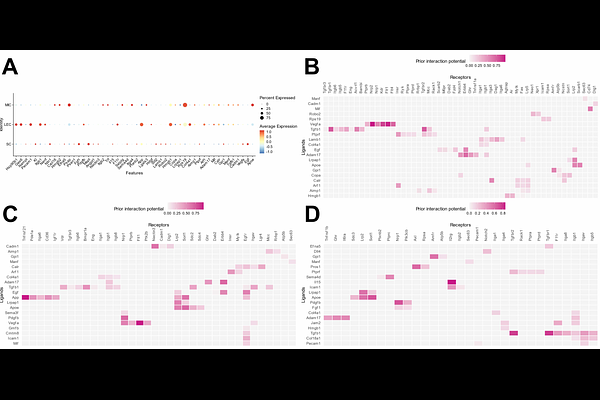
AbstractHypertension (HTN) is the most prevalent risk factor for severe cardiovascular disease and can cause major renal damage, inflammation, and immune cell accumulation. Lymphatic endothelial cells (LECs) are involved in the removal of pro-inflammatory immune cells and cytokines and kidney-specific augmentation of lymphangiogenesis can prevent or reduce HTN. In our previous paper, we performed single-cell RNA sequencing (scRNAseq) on CD31+/podoplanin+ renal cells from mice that underwent angiotensin II-induced (A2HTN) or salt sensitive (SSHTN) models of HTN (and their respective controls) and identified populations of LECs, myeloid immune cells (MICs), and a novel multipotent population we dubbed support cells (SCs). Using NicheNet, we compared baseline signaling between these three cell types in control samples and differences in signaling between control and HTN samples in both LECs and SCs. Ligands with high regulatory potential were identified for all three cell types, with Tgfb1 having the strongest and most consistent activity across all cell types. When comparing control and HTN samples in both LECs and SCs, HTN samples consistently had a larger number of downstream targets enriched and targets that were enriched in HTN samples also corresponded to significantly increased differentially expressed genes (p<0.01) as reported previously. Significant GO terms (p<0.01) were identified from targets and showed a shift in HTN samples away from homeostatic processes and toward growth and proliferation in LECs and translation and metabolism in SCs. Validation and manipulation of the ligand-receptor-target links identified here may provide novel approaches to reduce renal inflammation and immune cell activation.