A Two-Arm Metabolic-Efflux Adaptation Framework in Klebsiella pneumoniae under Mixed Pharmaceutical Exposure: rutA-Linked Oxidative Entry and rutR-Associated Regulation

A Two-Arm Metabolic-Efflux Adaptation Framework in Klebsiella pneumoniae under Mixed Pharmaceutical Exposure: rutA-Linked Oxidative Entry and rutR-Associated Regulation
Sinha, S.; Barman, P.; Haldar, D.; Chakraborty, R.
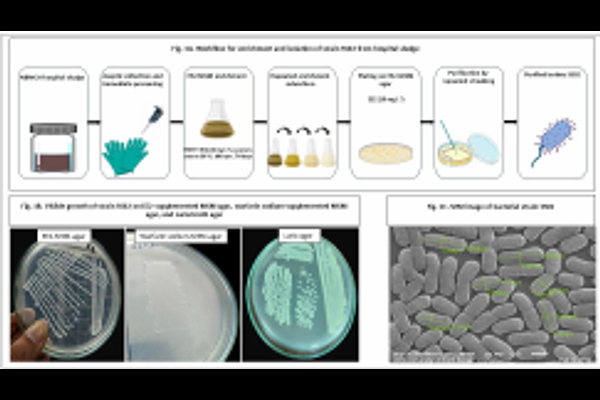
AbstractChemically complex pharmaceutical mixtures in wastewater and sludge can affect microbial adaptation; however, the responses to different co-occurring compounds have not been elucidated well. In this study, the adaptation of a strain derived from hospital sludge, Klebsiella pneumoniae SS02, to 17-ethinylestradiol (EE2), warfarin sodium, and their combination has been studied. The organism grows under all three conditions, and pre-exposure experiments show induction and cross-induction to substrates. UHPLC MS/MS analyses demonstrated that there is conditional depletion of the parent compound EE2 by ~15% at 36 h post-treatment compared to initial concentrations, but not for the abiotic and non-adapted controls. The rate of warfarin sodium depletion was approximately ~30% within 36 h and was in accordance with first order kinetics (k = 0.0102 /h; t/2 = 67.9 h). Under the combined treatment regime, there was a delay in warfarin sodium depletion, suggesting staged substrate consumption. Growth inhibition with efflux inhibitors confirmed transport-driven tolerance. A genome-based study revealed the coordinated response strategy that involved a proposed flavin-dependent monooxygenase (RutA), an oxidative entry into the pathway; redox processing linked to Hpa; aromatic metabolism through {beta}-ketoadipate pathway; and RND efflux system. The structural study additionally supported ligand-mediated decrease in DNA binding affinity of RutR, which is in agreement with de-repression of the substrate-activated regulatory mechanism. All these findings lead to the development of a dual-strategy for adaptation model in which oxidative modification and efflux-mediated protection work together under the influence of a mixture of pharmaceuticals.