Multimodal transcriptomics and calcium imaging reveal a novel subset of polymodal nociceptors expressing the interleukin 1 receptor in mice

Multimodal transcriptomics and calcium imaging reveal a novel subset of polymodal nociceptors expressing the interleukin 1 receptor in mice
Illiano, C.; Belanger, D.; Stratton, H. J.; Vallieres, N.; Fortin, N.; Lessard, M.; Brochoire, L.; Christin, M.; De Koninck, Y.; Sharif, R.; Ross, S. E.; Defaye, M.; Wang, F.; Lacroix, S.
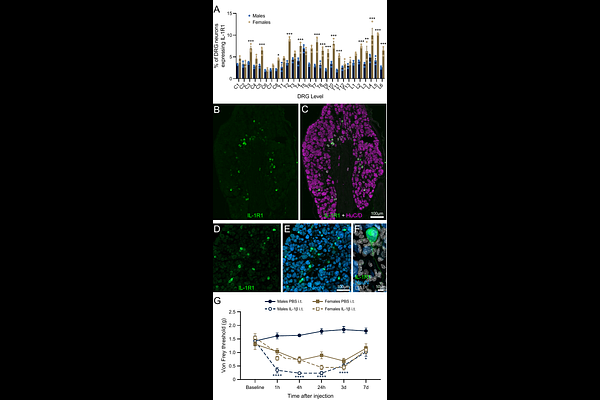
AbstractWe previously established that sensory neurons in the mouse dorsal root ganglia (DRG) express a functional receptor for the proinflammatory cytokine interleukin (IL)-1. We also demonstrated that deletion of the IL-1 receptor type 1 gene, Il1r1, in TRPV1-expressing (+) neurons prevented pain in models of chronic inflammatory diseases such as multiple sclerosis, rheumatoid arthritis and osteoarthritis. Here, we found a marked sex difference in the abundance of IL-1R1+ neurons, which represented approximately 10% of all DRG neurons in females but only 5% in males. However, male mice exhibited stronger, longer-lasting mechanical hypersensitivity than females after IL-1{beta} injection into the cerebrospinal fluid. In vivo calcium imaging revealed that IL-1{beta}-responsive DRG neurons responded to cutaneous mechanical and capsaicin stimulation. By integrating spatial transcriptomics with single-cell RNA sequencing (scRNA-Seq), we identified a gene signature uniquely marking IL-1R1+ neurons, including genes such as Ada, Cysltr2, Gpr139, Htr1a, Htr1f, Il31ra, Nppb, Npy2r, Nts, P2rx2, Pde4c, and Sst, with Ada and Sst validated at the protein level. Omics analysis revealed that IL-1R1+ DRG neurons form a subset of non-peptidergic type 3 (NP3) sensory neurons, which are linked to inflammatory pain and itch. However, Il1r1 deletion did not affect itch responses to serotonin, histamine, or chloroquine, and these mediators failed to induce calcium activity in IL-1{beta}-responsive DRG neurons. Finally, scRNA-seq identified several genes upregulated in NP3 neurons after IL-1{beta} injection, including Alkal2, Bdnf, and Lcn2, associated with chronic inflammatory pain. Thus, our study unveils novel markers for IL-1R1+ nociceptors and reaffirms their selective role in inflammatory pain.