Ebola virus exploits host lncRNA LINC01740 to enhance ATF3 and suppress antiviral immune responses

Ebola virus exploits host lncRNA LINC01740 to enhance ATF3 and suppress antiviral immune responses
Shtanko, O.; Gunturu, T.; Gopal, A.; Djurkovic-Lopez, M.; Nguyen, H.; Jayakumar, S.; DSilva, A. L.; Thomas, A.; Kulkarni, S.
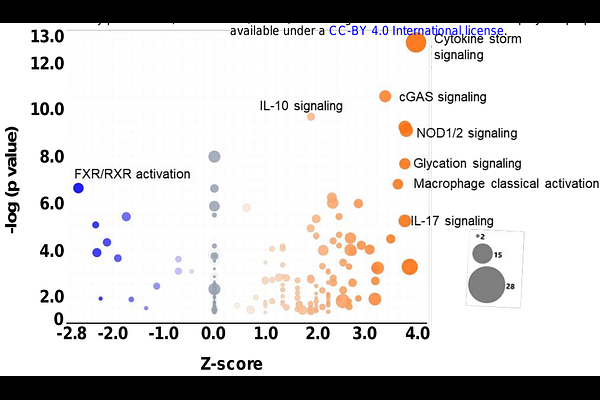
AbstractEbola virus (EBOV) infection causes severe hemorrhagic fever marked by dysregulated cytokine production, impaired antiviral defenses, and multi-organ failure. Macrophages are primary targets of EBOV, and viral replication profoundly alters macrophage transcriptional programs, driving hyperinflammation. Although long non-coding RNAs (lncRNAs) are increasingly recognized as regulators of immunity and viral pathogenesis, their roles in EBOV infection remain poorly understood. We performed comprehensive transcriptomic profiling of primary human monocyte-derived macrophages infected with the highly pathogenic EBOV Mayinga variant. Infection triggered extensive remodeling of both coding and non-coding transcriptomes, including hundreds of differentially expressed lncRNAs. Functional analysis of neighboring protein-coding genes of EBOV-induced lncRNAs (EVILs) revealed enrichment of pathways linked to cytokine signaling, transcriptional regulation, and cell signaling, all of which are central to Ebola virus disease (EVD) pathogenesis. Among the most strongly induced EVILs, LINC01740 and its neighboring protein-coding gene, Activating Transcription Factor 3 (ATF3), were significantly upregulated. Antisense oligonucleotide-mediated inhibition of LINC01740 reduced ATF3 mRNA and protein levels. CRISPR/Cas13d-mediated knockdown of ATF3 restored type I interferon (IFN-I) signaling and antiviral gene expression in EBOV-infected macrophages. Mechanistically, ATF3 functioned as a negative regulator of IFN beta and type I interferon-stimulated gene expression, thereby suppressing antiviral immune responses. Together, these findings identify a previously unrecognized LINC01740-ATF3-IFN-I regulatory axis that EBOV exploits to promote immune suppression and viral replication. Targeting this lncRNA-transcription factor network could offer new therapeutic strategies to restore immune function and combat Ebola virus disease.