Growth and molecular responses of potato to lunar regolith simulants

Growth and molecular responses of potato to lunar regolith simulants
Handy, D.; Loeffler, A.; Knudson, M.; Campbell, S.; Jaiswal, P.; Anderson, J. C.; Goyer, A.
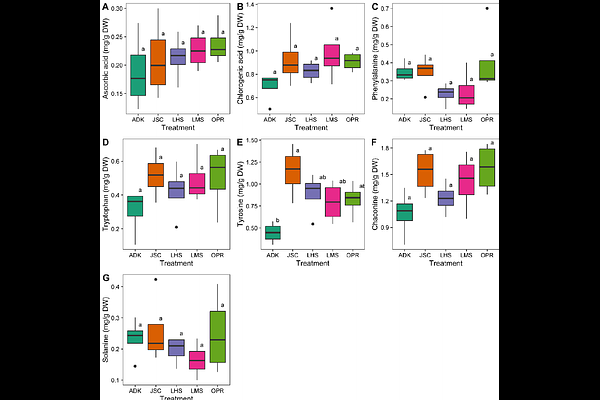
AbstractBackground On-site food production will be required to achieve the goal of NASA for a sustainable human Lunar habitat. Toward this end, the use of fine, soil-like material on the Lunar surface, known as regolith, has been proposed as a plant growth substrate. However, how this substrate may affect plant growth is not well understood. Lunar regolith is devoid of the organic materials that make soils on earth fertile for plant growth, and has been weathered by solar winds, cosmic rays, and micrometeorite impacts. Additionally, regolith at certain lunar sites may contain heavy metals. These metal ions may leech, thus posing challenges with accumulation in plant material. To address and verify the efficacy of regolith-based crop production, we used lunar regolith simulants (LRS). We investigated the effects of LRS on potato (Solanum tuberosum cv Modoc) plant and tuber development, gene expression, and nutrition profiles. Results Growth in LRS negatively impacted the potato plant size and tuber yield. While the degree of impact differed between simulants, all plants grown in LRS were statistically significantly shorter in height than plants grown in control soil. Further experiments with the lunar mare simulant 1E (LMS-1E) show that these effects can be ameliorated through the addition of vermicompost, an organic component, with a 70:30 v/v ratio of LMS-1E to compost being virtually indistinguishable from controls. Changes in gene expression profiles also differed between simulants, with genes related to photosynthesis, biotic and abiotic stress responses, signaling, and terpenes and flavonoids metabolism being commonly altered. Despite these observed differences in transcription, broad changes in metabolite profiles were not observed. Conclusions LRS are clearly stressful on plants. However, amendment of the substrate with composted materials appears to be a viable strategy to alleviate stress. Given these observations, regolith-based agriculture may not be viable for very early food production when organic matter content is low. However, this would improve over time with continual incorporation of organic matter to regolith. As such, we believe regolith-based agriculture is a viable long-term strategy.