Nutritional responses of bumblebees to thermal stress

Nutritional responses of bumblebees to thermal stress
Monchanin, C.; Kraus, S.; Gerbore, J.; Devaud, J.-M.; Morimoto, J.; Lihoreau, M.
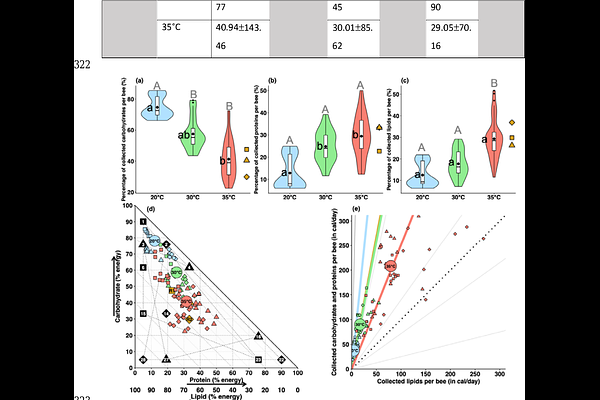
AbstractExtreme climatic events impose considerable stress on organisms with consequences for key ecological interactions such as pollination. Because temperature directly affects metabolic processes, heat variations may also importantly influence the nutritional needs and feeding choices of animals. Here, we studied the effects of thermal stress on the nutritional choices and performances of bumblebees, using a 3D nutritional geometry design. At optimal temperature for colony development (30{degrees}C), bees successfully balanced carbohydrate, protein, and lipid collection, at levels beneficial for body weight and survival. Under cold stress (20{degrees}C), bees reduced their overall nutrient collection while selecting proportionally more carbohydrates, thereby prioritizing survival over weight gain. Under heat stress (35{degrees}C), nutrient balancing was disrupted and survival dropped. Notably however, across all temperatures, bees maintained stable lipid collection while flexibly adjusting the amount of carbohydrates and proteins, suggesting strong constraints on lipid regulation. Given the pivotal role of bees for pollination, identifying how their nutritional needs change in response to climatic conditions is of prior importance for food safety and the conservation of terrestrial ecosystems.