Determination of GLP-1 Secretion Potential of Dead and Live Akkermansia muciniphila Using Human L-cells

Determination of GLP-1 Secretion Potential of Dead and Live Akkermansia muciniphila Using Human L-cells
Nayak, S.; Rajagopalan, P.; Sunhare, R.; Jain, S.
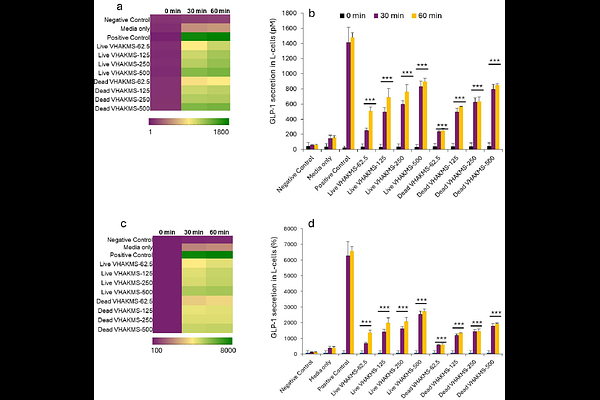
AbstractAbstract Background/Objectives: Glucagon-Like Peptide-1 (GLP-1) is a key incretin hormone that regulates glucose homeostasis and energy metabolism. Impaired GLP-1 signaling contributes to the development of obesity, metabolic syndrome, and type 2 diabetes. Emerging evidence indicates that gut microbiota-derived components can influence GLP-1 secretion, highlighting the therapeutic potential of microbial modulators. Akkermansia muciniphila, a next-generation probiotic associated with improved metabolic health, remains underexplored for its capacity to stimulate GLP-1 release. This study aimed to investigate the GLP-1 stimulatory effects of live and pasteurized (dead) A. muciniphila strains in human enteroendocrine cells. Methods: Human enteroendocrine L-cells (NCI-H716) were treated with varying doses of live and dead A. muciniphila from Vidya Herbs proprietary VHAKM strain and a commercially available marketed strain (dead form). Following incubation, GLP-1 levels were quantified from culture supernatants using enzyme-linked immunosorbent assay (ELISA). Comparative analyses assessed differences in GLP-1 secretion between strains and treatment forms. Results: Both live and pasteurized VHAKM strains significantly increased GLP-1 secretion compared to untreated controls. The live VHAKM strain exhibited higher GLP-1 stimulatory activity than its pasteurized counterpart and the marketed strain. The results suggest a strain-specific and viability-dependent modulation of GLP-1 secretion in human L-cells. Conclusions: This study demonstrates that A. muciniphila VHAKM enhances GLP-1 secretion in a strain- and form-dependent manner, with live cells showing superior efficacy. These findings provide foundational insights for developing microbiome-targeted interventions to boost endogenous GLP-1 levels and improve metabolic health outcomes.