ARID3a-Expressing Naive B Cells in SLE have an Activated Phenotype and Transiently Express Surface CD68

ARID3a-Expressing Naive B Cells in SLE have an Activated Phenotype and Transiently Express Surface CD68
Garton, J.; Hocker, J. R. S.; Garman, L.; Zhong, H.; Zimmerman, K.; Guthridge, J. M.; James, J. A.; Webb, C. F.
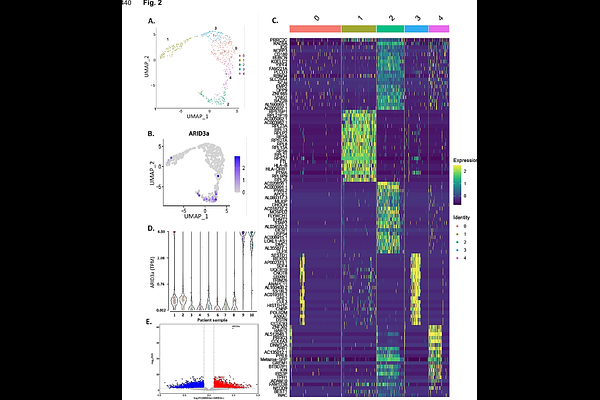
AbstractNumbers of ARID3a (AT-Rich Interaction Domain 3a) -expressing B lymphocytes from patients with systemic lupus erythematosus (SLE) are associated with increased disease activity. Normally, ARID3a-expressing circulating naive B cells are rare, but in SLE naive B cells dramatically increase ARID3a expression. We found that in vitro stimulation of B lymphocytes from healthy individuals with a cocktail of cytokines and agonists induced ARID3a in a subset of activated naive B cells and in IgD-CD27- double negative B cells previously associated with autoimmunity. Single cell RNA-seq of isolated naive B cells from ten SLE patients, with varying frequencies of ARID3a-expressing cells, revealed that ARID3a-associated genes included activation markers. Moreover, our data revealed the unexpected co-expression of the scavenger receptor CD68 with ARID3a, at both the transcript and protein level, in activated subsets of naive B cells. Inhibition of ARID3a in stimulated B cell cultures blocked naive B cell activation and CD68 expression. Together, these data identify ARID3a and CD68 as markers of naive B cell precursors associated with autoimmunity in SLE.