Sex-specific electrophysiology and cholinergic responses underlie differential mechanisms of arrhythmia vulnerability in rabbit atria

Sex-specific electrophysiology and cholinergic responses underlie differential mechanisms of arrhythmia vulnerability in rabbit atria
Smith, C. E. R.; Wang, L.; Guevara, A. M.; Mott, L. R.; Ni, H.; Grandi, E.; Ripplinger, C. M.
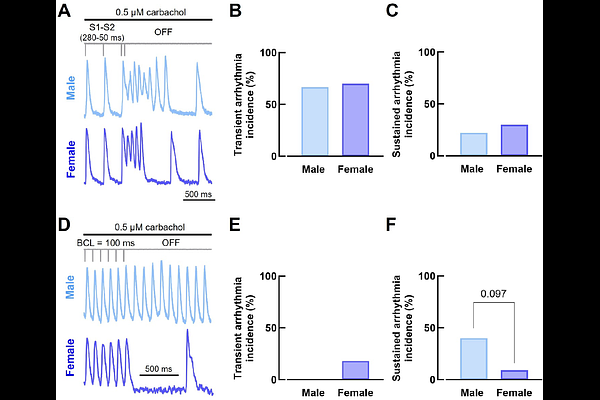
AbstractBackground: Sex differences in the epidemiology of atrial fibrillation are well-documented; however, the underlying mechanisms remain poorly understood. This gap in knowledge is compounded by limited data on sex-specific atrial electrophysiology in the absence of disease. Objectives: The aim of this study was to investigate sex differences in atrial electrophysiology and arrhythmia susceptibility in a translationally-relevant rabbit model. Methods: Dual optical mapping of transmembrane voltage and Ca2+ was performed on intact atria of young (3.5-5 months) male and female rabbit hearts. Baseline atrial electrophysiology and arrhythmia susceptibility were investigated using rapid pacing and premature stimulation and further tested with the parasympathomimetic carbachol. Sex and regional differences in gene expression were assessed using qPCR. Results: Females exhibited similar action potential duration (APD), but greater APD heterogeneity across the atria at slower rates, along with longer Ca2+ transient durations compared to males. Greater APD heterogeneity in females was rate-dependent and comparable to males at faster pacing frequencies; however, it was associated with greater susceptibility to transient reentrant arrhythmias with premature stimuli. After carbachol application, males had heightened vulnerability to arrhythmia. This was associated with cholinergic-mediated APD shortening in both atria in males, but only in the right atrium in females. Sex differences in carbachol responses were linked to variations in muscarinic receptor and acetylcholine-activated potassium channel gene expression. Conclusions: These findings demonstrate sex and regional differences in atrial electrophysiology at baseline and in response to cholinergic stimulation in the healthy heart that may contribute to sex-specific mechanisms of arrhythmia.