Sowing date effects on anther dehiscence, pollen germination on the stigma, and fertility under heat in Japanese rice

Sowing date effects on anther dehiscence, pollen germination on the stigma, and fertility under heat in Japanese rice
Kimura, K.; Yamaguchi, T.; Matsui, T.
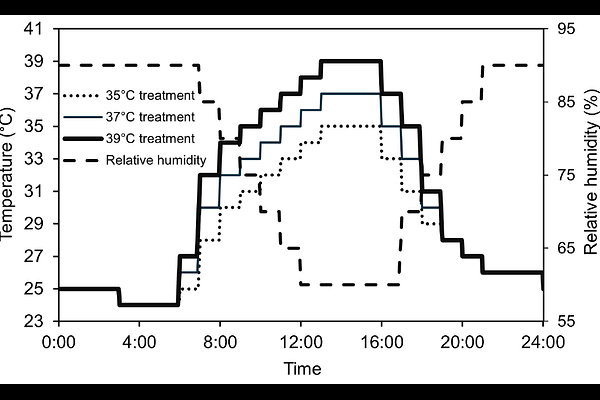
AbstractHeat-tolerant rice cultivars are essential for mitigating global warming impacts. Basal anther dehiscence length (BDL) is a promising visible morphological marker for heat tolerance through stable pollination. We investigated the effects of sowing date on anther morphology, pollination, and fertility under controlled high-temperature conditions (35, 37, or 39 {degrees}C at flowering). Three japonica cultivars--'Akitakomachi' (early heading), 'Koshihikari' (medium), and 'Hatsushimo' (late)--were sown monthly over 3 months and grown in pots. At heading, the plants were exposed to the temperature treatments for 3 days, and the proportion of florets with [≥]10 germinated pollen grains on the stigma (GP10) and seed set were assessed. Among anther traits, BDL showed the greatest variation, with all cultivars from the second sowing exhibiting the shortest BDL. Analysis of variance revealed significant effects of genotype, sowing date, and their interaction on anther traits and fertility. Regression analysis indicated that fertility was associated with GP10, with BDL contributing significantly to GP10 in the late-heading 'Hatsushimo', together with maximum temperature at flowering. Thus, both genotype and environment shape anther morphology, pollination, and fertility, indicating that BDL plasticity and genotype-specific environmental responses must be carefully considered when using BDL as a breeding marker for heat tolerance.