Modification-aware AI enables terminal chemical modifications for peptide design and discovers potent antimicrobials

Modification-aware AI enables terminal chemical modifications for peptide design and discovers potent antimicrobials
Xu, J.; Torres, M. D. T.; Li, C.; Li, J.; Li, F.; Song, J.; de la Fuente, C.
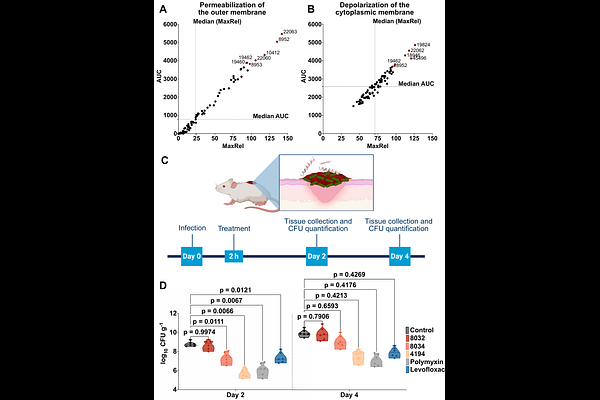
AbstractAntimicrobial resistance (AMR) is an escalating global health threat, intensifying the urgent need for novel antibiotics. Here, we introduce Termini, a generative machine learning (ML) framework that integrates peptide generation, classification, and regression modules to systematically identify potent antimicrobial peptides (AMPs). A key feature of this pipeline is its explicit design of both N- and C-terminal modifications, combined with predictive modeling across 15 bacterial species. We experimentally validated the framework against 11 pathogenic species, representing the broadest spectrum of testing reported to date in such a study. We synthesized and tested 120 peptides (including 60 unique amino acid sequences) with and without terminal modifications. Remarkably, 111 of these peptides (92.5%) demonstrated antimicrobial activity in vitro. Comparative analyses demonstrated that terminal modifications substantially enhanced antimicrobial potency. Furthermore, the lead candidates identified through in vitro screening exhibited robust anti-infective efficacy in subsequent in vivo experiments, confirming their therapeutic potential. Collectively, these results highlight the high hit rate, biological relevance, and translational promise of this integrative, modification-aware AI framework for next-generation antimicrobial peptide development.