Loss-of-function phenomics, ncORFs, and ambiguity of mutant phenotypes in Medicago truncatula

Loss-of-function phenomics, ncORFs, and ambiguity of mutant phenotypes in Medicago truncatula
Cakir, U.; Gabed, N.; Kaya, S.; Benedito, V. A.; Brunet, M. A.; Roucou, X.; Kryvoruchko, I. S.
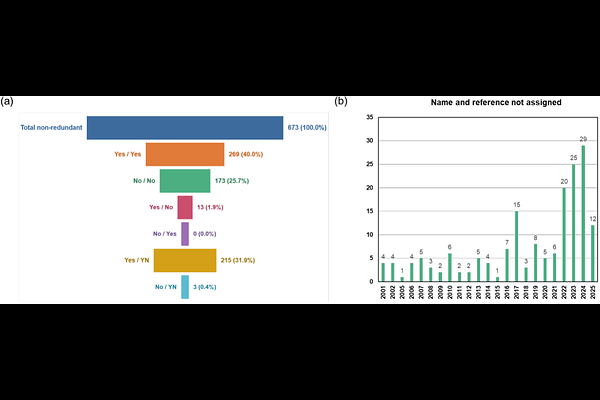
AbstractNon-canonical open reading frames (ncORFs) are an emerging area of research that is quickly gaining momentum. Many peptides and proteins missed in initial annotation efforts (ncProts) were subsequently shown to be crucial for a wide range of biological processes. The discovery of ncORFs continues to improve the accuracy of loss-of-function studies because they often occupy the same genomic spaces as annotated ORFs. While databases of mutant phenotypes linked to genomic loci are available in a few species, none of these databases integrate the information on ncORFs present in already characterized loci. In this study, we introduce a nearly comprehensive loss-of-function phenomics dataset of Medicago truncatula (673 loci characterized over the past 30 years), which should become an integral part of the genome browser of this organism. We used this dataset to provide a critical analysis of the potential contribution of ncORFs to published phenotypes. We detected mass spectrometry (MS)-validated ncORFs in 10 functionally characterized genes, including major regulators of development and symbiotic relationships. We also found conserved ncORFs in 113 characterized genes, including four genes with highly conserved ncORFs. We show that in some studies, the contribution of ncORFs can be ruled out, while in others it cannot. Using real examples, we systematized ambiguities associated with ncORFs. Furthermore, we highlighted little-known trans effects of insertional mutagenesis on splicing as contributors to that ambiguity. Finally, our meta-analysis of published phenotypes indicates that different protein classes have significantly different (unique) proportions of unconditional, conditional, and neutral phenotypes, potentially reflecting their relative functional importance.