Cryo-EM structures of a neofunctionalized tardigrade peroxiredoxin specialized for nucleic acid binding

Cryo-EM structures of a neofunctionalized tardigrade peroxiredoxin specialized for nucleic acid binding
Yamato, H.; Fukuda, Y.; Obana, M.; Fujio, Y.; Inoue, T.
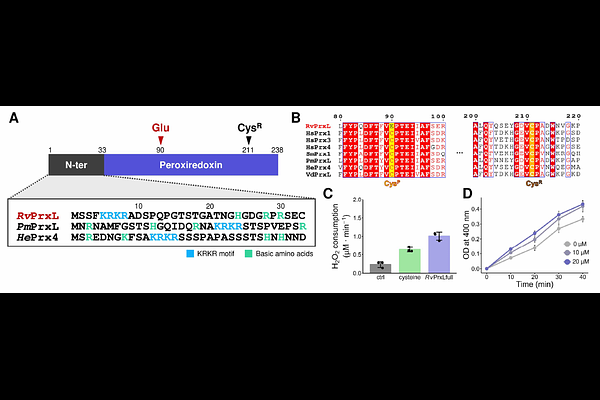
AbstractSome terrestrial tardigrades can endure severe oxidative stress in part through their gene-expanded repertoire of antioxidant proteins. However, among these antioxidant proteins, RvPrxL, a peroxiredoxin (Prx)-like protein from Ramazzottius varieornatus strain YOKOZUNA-1, is unusual in that the catalytic cysteine is replaced by glutamate, apparently incapacitating canonical peroxidase function. In this study, we investigated the structure and function of this atypical Prx. Biochemical assays demonstrated that RvPrxL completely lacks canonical peroxidase and chaperone activities. Cryo-EM analysis revealed a unique 20-mer structure of RvPrxL. We also observed that the tardigrade-specific N-terminal region of RvPrxL helps retain the high-order oligomeric assembly even in the presence of highly concentrated hydrogen peroxide. The N-terminal region also promotes nuclear localization of RvPrxL and mediates binding to nucleic acids including nuclear RNAs. Furthermore, combining a standard cryo-EM method and a new approach in which cell Lysates were Applied Directly on cryo-EM Grids (LApDoG), we visualized two distinct nucleic acid binding modes of RvPrxL, termed "on-ring" and "in-ring", which likely reflect distinct physiological roles or modes of action. Collectively, these findings show that RvPrxL has been neofunctionalized to interact with nucleic acids in the nucleus, highlighting unexpected functional diversification of antioxidant proteins in tardigrades.