A rhizarian genome reveals an osmotrophic route to extracellular digestion in eukaryotes

A rhizarian genome reveals an osmotrophic route to extracellular digestion in eukaryotes
Oeztoprak, H.; Graf, J.; Jacobs, R.; Kaiser, F.; Dumack, K.
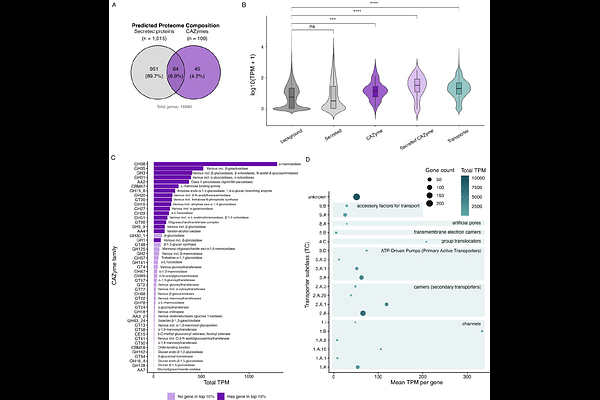
AbstractRhizaria, one of the most species-rich and ecologically important eukaryotic supergroups, accommodates a newly discovered osmotrophic species, yet high-quality genomic resources remain scarce, limiting our understanding of their metabolic diversity and ecological functions. Here, we present the genome of a Saccharomycomorpha psychra, the first rhizarian telomere-anchored assembly, to be explored as a model and reference for rhizarian ecology and evolution. The 62 Mb assembly, of which half comprises 22 telomere-to-telomere scaffolds, shows a BUSCO completeness of 94.1%, encodes 17,680 genes, and provides the genomic foundation for investigating rhizarian ecology and evolution. The genome of osmotrophic Saccharomycomorpha psychra reveals a functionally integrated secretome of 1,015 proteins dominated by carbohydrate-active enzymes (CAZymes), proteases, lipases, and oxidoreductases. Together with 303 predicted high-confidence membrane transporters of a total of 680, skewed toward H-coupled secondary carriers, constitute the genomic signature of an extracellular digestive strategy convergent with saprotrophic fungi. Phenotypic microarray assays confirmed active utilization of 16 carbon sources, including all five C5 pentose sugars tested, consistent with the predicted arabinose and ribokinase pathways among the most highly expressed metabolic genes in the transcriptome. These findings demonstrate that osmotrophic saprotrophy has evolved independently in Rhizaria with enzymatic solutions that closely parallel those of evolutionary distant fungal decomposers, highlighting the power of ecological context over phylogenetic heritage in shaping extracellular metabolic architecture.