A transparent multicriteria and fuzzy classification approach for genome-based probiotic candidate prioritisation

A transparent multicriteria and fuzzy classification approach for genome-based probiotic candidate prioritisation
Ounissi, N. E.; Gomri, M. A.; El Hadef El Okki, M.
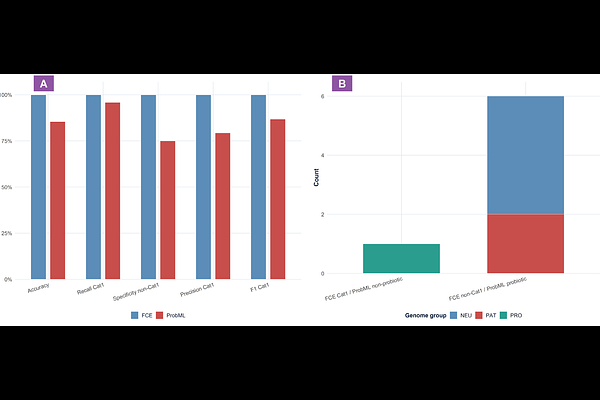
AbstractThe identification of novel probiotic candidates with potential health-promoting properties remains a major challenge in food biotechnology and increasingly relies on in silico screening of genomic information. However, probiogenomic markers are heterogeneous, and safety, survival-colonisation, and functional-benefit traits do not contribute equally to probiotic potential. This study developed the Structured Probiotic Potential Index (SPPI), a fuzzy multicriteria system for genome-based probiotic candidate prioritisation. A hierarchical evaluation structure was established from probiogenomic evidence and organised into three main pillars and fourteen subcriteria. Expert judgements were collected using the Analytic Hierarchy Process, followed by consistency-based curation and weight aggregation. A curated dataset of 48 complete bacterial genomes, distributed into probiotic, potentially probiotic, neutral, and pathogenic groups, was taxonomically validated and analysed using an automated probiogenomic screening pipeline. Genome-wide screening generated 3,218 binary genomic features, from which curated probiogenomic markers were mapped to the scoring hierarchy. The resulting index was formulated as a normalised expert-weighted equation integrating safety, survival-colonisation, and functional-benefit components. SPPI prioritised genomes according to weighted probiogenomic profiles and separated pathogenic genomes from favourable probiotic and potentially probiotic profiles within the analysed dataset. Downstream Fuzzy Comprehensive Evaluation transformed the continuous score into probiotic/potentially probiotic, neutral, and pathogenic classes. Under internal leave-one-out evaluation, all 48 genomes were assigned to their expected reference classes, while confidence analysis distinguished high-confidence from borderline assignments. Post-classification comparison with ProbML showed concordant behaviour for most genomes and discordant predictions for selected cases. These results support SPPI as a transparent genome-based decision-support system for early probiotic candidate prioritisation before experimental validation.