Within- and between-host dynamics of highly pathogenic avian influenza in domestic birds from Pennsylvania farms and live bird markets

Within- and between-host dynamics of highly pathogenic avian influenza in domestic birds from Pennsylvania farms and live bird markets
Jaeger, A. S.; Cruz-Adames, E.; Shank, S. D.; Chupikova, I.; Kumta, K.; Anis, E.; Moncla, L. H.
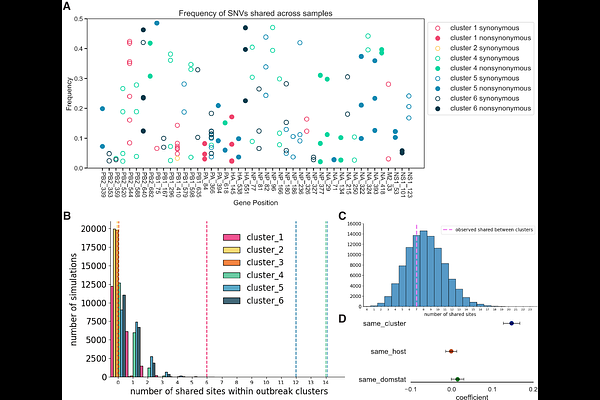
AbstractSince late 2021, highly pathogenic avian influenza viruses (HPAI) of the H5 subtype clade 2.3.4.4b have spread across the Americas, devastating wildlife, agricultural animals, and resulting in dozens of human spillovers. National surveillance strategies generally provide only a single representative sequence per poultry outbreak, precluding fine-scale geographic transmission inference or studies of within-outbreak evolution. We produced high-quality deep sequence data from 46 infected Galliformes and Anseriformes sampled from commercial farm and live bird market (LBM) outbreaks in Pennsylvania from 2023-2025. We found that H5N1 viruses were introduced into Pennsylvania at least 68 independent times. We recover independent origins of live bird market outbreaks within the same county 3 weeks apart, and transmission between Pennsylvania LBM and New York commercial birds, suggesting high transmission risk within the Northeast live bird market distribution system. Analyses of within-farm variant populations show frequent variant sharing between samples from the same outbreak, suggesting that variants are propagated among epidemiologically linked infections. We identified 9 known adaptive mutations in these samples, including one instance of PB2 D701N in a LBM chicken sample, suggesting that while rare, concerning mammalian adaptive mutations can be present within these domestic outbreaks. Our data suggest that domestic bird outbreaks support high circulating diversity and wide transmission bottlenecks, increasing the risk of minority variants arising and propagating between infections. These data can help inform targeted biosecurity measures and better quantify the risk of viral adaptation during agricultural outbreaks.