Structure-based recasting of a mammalian DNA transpososomeas an obligate heterodimer

Structure-based recasting of a mammalian DNA transpososomeas an obligate heterodimer
Mandal, R.; Hickman, A. B.; Desai, R.; Primich, A.; Dyda, F.
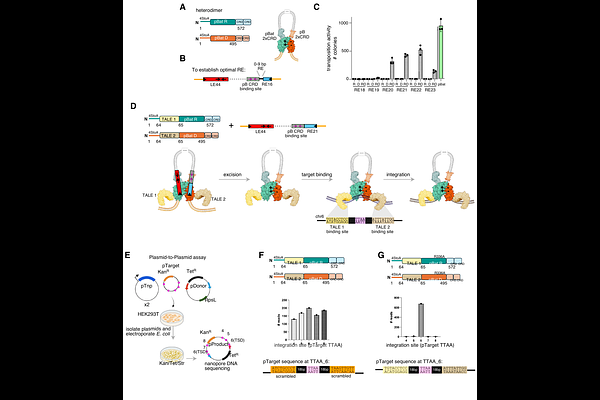
AbstractEukaryotic DNA transpososomes assemble as nucleoprotein complexes containing multiple identical transposase protomers. We determined the structure of the hyperactive Myotis lucifugus piggyBat transpososome and discovered that it uses an unusual crescent-shaped, asymmetric tetramer to synapse divergent inverted terminal repeats. We found that identical amino-acid sequence motifs adopt distinct roles to mediate two modes of DNA binding: one to perform strand transfer and one, devoid of catalytic activity, that promotes synapsis while simultaneously protecting the transposon from auto-destructive internal cleavage by its active sites. Guided by the observed modularity of the assembly, we engineered an obligate heterodimeric system by identifying mutations that suppress homodimer formation and paired this with specific point mutations that prevent non-targeted integration. By adding to the heterodimer two different TALE domains designed to bind a human genomic safe harbor sequence, we achieved >98% targeted integration at the intended sequence in a plasmid-based assay, validating the viability of heterodimeric transposases for genomic applications.