Host cell remodeling via cyclin dependent kinases drives Ebola virus replication and transcription

Host cell remodeling via cyclin dependent kinases drives Ebola virus replication and transcription
Shamorkina, T. M.; Snikkers, D.; Heck, A. J. R.; Snijder, J.
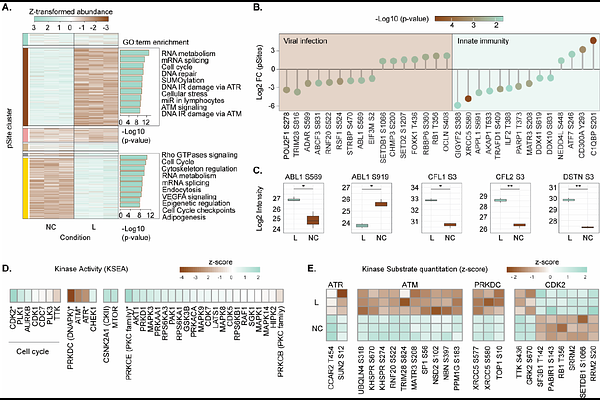
AbstractEbola virus (EBOV) causes re-emerging outbreaks of viral hemorrhagic fever with high case-fatality rates. As a negative-sense single stranded RNA virus, EBOV depends on its RNA-dependent RNA polymerase (L protein) to transcribe and replicate the viral genome. This takes place in cytoplasmic inclusion bodies that form following host cell remodeling involving yet unknown signaling pathways. Here, using mass spectrometry-based (phospho-)proteomics, we profiled global protein abundance and site-specific phosphorylation in HEK293T cells expressing an EBOV minigenome system. Our data reveal EBOV-induced rewiring of the host proteome and phosphorylation signaling landscape, including perturbations in cell cycle control, cytoskeletal organization, innate immune regulation, and DNA damage response. Kinase network analysis revealed that Hippo pathway kinases and especially cyclin dependent kinases like CDK2 are central drivers of EBOV replication and transcription. The functional necessity of these signaling pathways is demonstrated via inhibition of CDK family kinases with small molecule inhibitors, which halted EBOV minigenome replication and transcription when administered in the low micromolar range, demonstrating that these pathways represent putative antiviral targets.