A model for PIP2/3 and Rnd1 effects on Plexin-B1 GAP activity on Rap1b GTPase derived from molecular dynamics simulations

A model for PIP2/3 and Rnd1 effects on Plexin-B1 GAP activity on Rap1b GTPase derived from molecular dynamics simulations
Bhattarai, N.; Sahoo, A. R.; Buck, M.
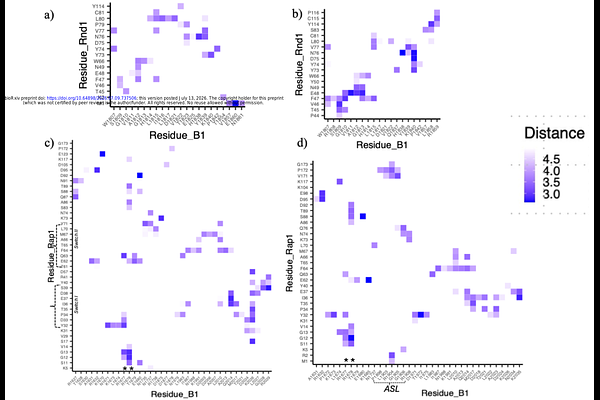
AbstractPlexin-B1 is a transmembrane receptor that integrates signals from Rho-family and Ras-family (Rap1b) GTPases to regulate cellular processes. While ligand simulated activation of the receptor is largely understood, the role of membrane composition and GTPase allosteric effects on plexin structure, internal protein dynamics, and function is still to be elucidated. Here, we performed multi-replica one-microsecond all-atom simulations of Plexin-B1-GTPase complexes on PIP2- and PIP3-containing membranes to investigate the effects of these two signaling lipids, as well as on the GTPases. We found that both Rap1b and Rnd1 stably associate with the membrane, with PIP2 promoting broader lipid engagement and stronger Rap1b-Plexin-B1 interactions, whereas PIP3 enhances Rnd1-Plexin contacts and induces a membrane proximal orientation of the Plexin juxtamembrane helix and makes contacts with a previously discovered activation switch loop. Contact map and network analyses revealed lipid-dependent shifts in allosteric communication, with PIP2 favoring Rap1b-centric hotspots and PIP3 favoring Rnd1-centric pathways. These predictions allow us to suggest a model for plexin intracellular region activation where both the identity of phosphoinositides and GTPase context synergistically stabilize Plexin-B1 membrane engagement, alter structural dynamics, and allosteric networks. Thus, we propose that the membrane is an active modulator of plexin receptor signaling.