Replication-coupled search positions MutH for strand incision in DNA mismatch repair

Replication-coupled search positions MutH for strand incision in DNA mismatch repair
Moores, A. N.; Banaz, N.; Makamure, T.; Uphoff, S.
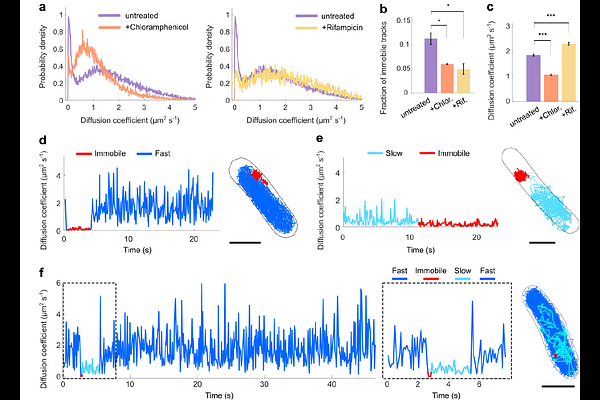
AbstractDNA mismatch repair (MMR) safeguards genome stability by correcting replication errors, yet how its components coordinate as an efficient pathway in living cells remains unclear. In Escherichia coli, MutS and MutL detect mismatches and must rapidly activate MutH to incise the nascent DNA strand at distantly located GATC sites. Here, we used live-cell single-molecule tracking to resolve the target-search dynamics of MMR proteins in vivo. We find that MutH binds DNA at hemimethylated GATC sites independently of mismatch recognition and without MutS or MutL. The autonomous recruitment of MutH is facilitated by a switch from fast diffusion to a slow-search mode near DNA replication forks. This guidance allows MutH to transiently occupy potential incision sites in the wake of replication forks, awaiting activation by MutS-MutL. The parallelised search mechanism of MMR proteins facilitates rapid and targeted repair of replication errors in cells.