Cytotoxicity of Pelargonic Acid and Its Commercial Formulation Roundup NL (Glyphosate-Free Roundup)

Cytotoxicity of Pelargonic Acid and Its Commercial Formulation Roundup NL (Glyphosate-Free Roundup)
Ferguson, S.; Mesnage, R.; Antoniou, M.
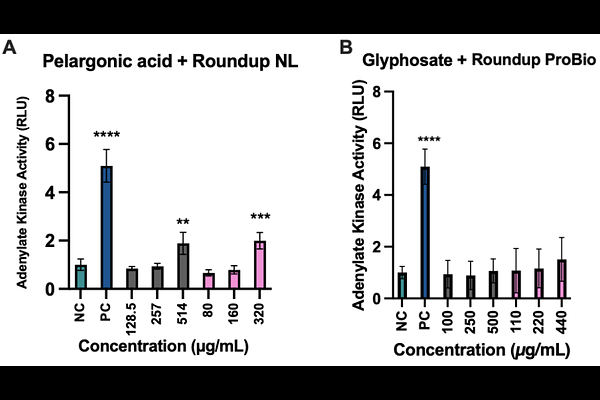
AbstractEvidence of negative health and environmental effects of glyphosate-based herbicides (GBHs) has led to marketing of glyphosate-free formulations. A frequent glyphosate replacement is pelargonic acid, which is rapidly degraded, leading to claims of greater safety and less environmentally damaging than GBHs. However, toxicity of commercial pelargonic acid formulations containing several co-formulants have not been determined. Using Roundup NL, a representative pelargonic acid-based herbicide, we undertook tissue culture cell assays measuring viability, plasma membrane integrity, DNA damage, and activation of stress-response pathways. In human hepatoma HepG2 cells, Roundup NL was more cytotoxic than pelargonic acid, and more toxic than the GBH Roundup ProBio and glyphosate as shown by reduced viability underpinned by plasma membrane damage. Pelargonic acid and Roundup NL did not induce oxidative stress. However, comet assays revealed that pelargonic acid but not Roundup NL caused a modest but significant increase in DNA damage at sub-cytotoxic concentrations. The murine embryonic stem cell-based ToxTracker system confirmed Roundup NL as not directly genotoxic but triggered oxidative stress and protein damage (ER stress, impaired proteostasis) indicating cell and assay dependency of oxidative stress pathway activation. Our results suggest that exposure to pelargonic acid-based herbicides constitutes a health hazard and that co-formulants present in Roundup NL contribute substantially to its overall toxicity.