Substrate biasing in UCHL5 proteoforms

Substrate biasing in UCHL5 proteoforms
Patel, R.; Pannala, N.; Lai, C. H.; Sriramoju, M. K.; Wang, Y.-S.; Cheng, T.; Jung, D.; Kelich, P.; Asadi, S.; Shestoperova, E.; Iyer, S.; Tajkhorshid, E.; Flaherty, D. P.; Strieter, E.; Hsu, S.-T. D.; Das, C.
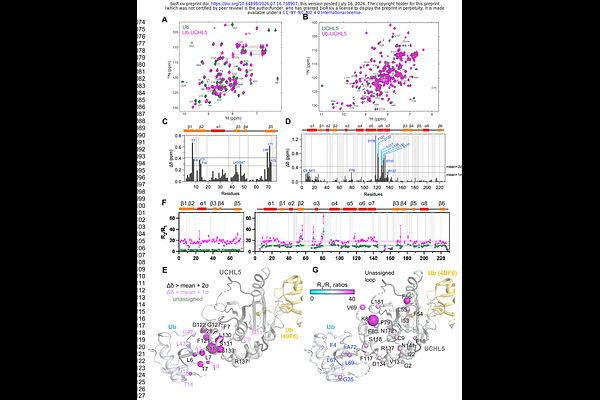
AbstractProteolytic deubiquitinating enzymes bridge a gap in substrate recognition through complex regulatory mechanisms. A growing portion of these are accomplished through proteoforms that uniquely control association and diverse sets of cleavage capabilities that relay distinct physiological outcomes. This study describes substrate biasing governed by UCHL5 proteoforms. It demonstrates that N-terminal ubiquitination activates the enzyme towards monoubiquitin substrates, a feature that is conserved across UCHL5 homologs. Crystallographic and spectroscopic data suggest that the N-terminal ubiquitin binds intramolecularly in an allosteric binding site and inhibits branched chain substrate cleavage. Association with Rpn13/Adrm1 relieves this inhibition and reestablishes its ability to debranch, potentially controlling nonspecific debranching compared to retention of needed activity on the 26S proteasome. Collectively, this study describes the molecular basis for substrate selectivity in a deubiquitinating enzyme, an unexplored area in the enzymes that counteract ubiquitin E3 ligases.