Bacterial DNA invasion triggers transposable element proliferation and genome expansion

Bacterial DNA invasion triggers transposable element proliferation and genome expansion
Cohen, Z. P.; Perkin, L.; Frandsen, P.; DeGiorgio, M.; Assis, R. P.
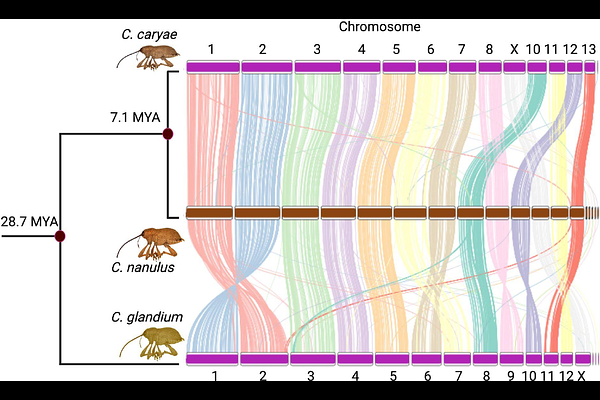
AbstractGenome size variation in eukaryotes is driven largely by transposable elements (TEs), yet the biological mechanisms that initiate their proliferation remain understudied. Here, we identify a recurrent association between bacterial horizontal gene transfer (HGT) and bursts of TE activity that contribute to genome expansion. By leveraging comparative genomics and genus-level pangenome analyses across three species of the nut weevil, Curculio, we detect extensive bacterially derived DNA sequences embedded within structurally dynamic genomic regions. These HGT-associated regions are dominated by a small number of young, proliferating TE families, particularly DNA type II Mavericks, which encapsulate transferred bacterial sequences and comprise a substantial fraction of recent genomic DNA in derived lineages. Analyses of codon usage bias, intron length, and functional enrichment suggest that most transferred genes undergo progressive pseudogenization over evolutionary time, whereas a subset of selectively advantageous HGTs persist. Together, our findings support a model linking foreign DNA invasion with TE proliferation, genome size variation, and molecular innovation.