Extensive genomic diversity in Desulfovibrio species reveals species-specific functional traits associated with disease

Extensive genomic diversity in Desulfovibrio species reveals species-specific functional traits associated with disease
Zheng, T.; Keidel, I.; Omer, H.; Joshipura, A.; Cenier, A.; Atay, E.; Tan, Y. H.; Wetzel, D.; Gacesa, R.; Zhao, S.; Mengoni, C.; Jin, S.; Co, N. A. K.; Peters, C.; Segata, N.; Ley, R.; Yabal, M.; Weersma, R. K.; Haller, D.; Schirmer, M.
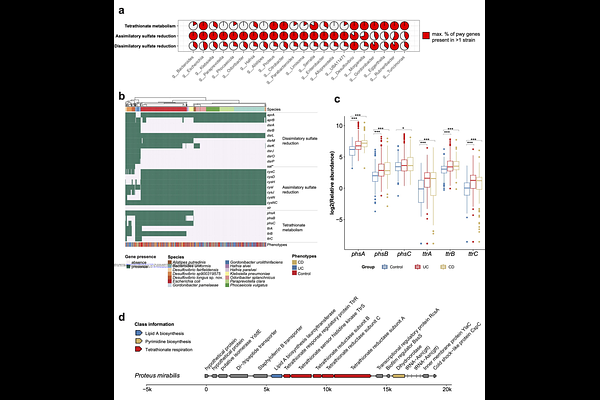
AbstractDesulfovibrio spp. are associated with inflammatory diseases and human health, yet limited representative genomes and isolates hinder our understanding of their role in disease. Here, we assembled a comprehensive database of 2,658 Desulfovibrio genomes across 90 diseases and 32 countries, including 24 human isolates. Genomic analyses showed extensive species diversity and revealed disease-associated functional traits, including flagellin and virulence genes (i.e. ureases). Flagellin-mediated Toll-like receptor 5 activation was species-specific and D. desulfuricans flagellin downregulated TGF-beta signalling in murine small intestinal organoids, suggesting impaired immune tolerance. Additionally, we investigated genomic capacity for hydrogen sulfide (H2S) production, a main Desulfovibrio metabolite. While health- and disease-associated Desulfovibrio spp. mainly encoded dissimilatory sulfate reduction, tetrathionate metabolism-encoding bacteria were exclusively detected in inflammatory bowel diseases, including Proteus mirabilis and Morganella morganii. Overall, our study provides a comprehensive genomic Desulfovibrio resource and identifies new links associating strain variation, functional traits and H2S-production with inflammatory diseases.