Temporal chromatin and transcriptome dynamics driven by JUND and progesterone receptor binding in the pregnant mouse myometrium

Temporal chromatin and transcriptome dynamics driven by JUND and progesterone receptor binding in the pregnant mouse myometrium
Khader, N.; Dorogin, A.; Shynlova, O.; Mitchell, J. A.
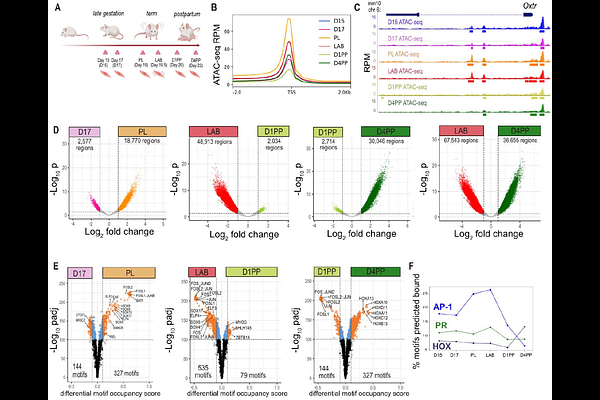
AbstractThe myometrium, the muscle layer of the uterus, undergoes profound phenotypic changes throughout pregnancy, labor, and postpartum, allowing for successful reproduction. Transcriptomic analysis of the murine myometrium revealed distinct gene expression signatures corresponding to these physiological stages, which reflect the dynamic remodeling processes occurring in the uterus during late gestation, term labor, and postpartum. These transcriptomic signatures at specific gestational points were accompanied by changes to the accessible chromatin landscape. Notably, increased chromatin accessibility was observed in the mouse myometrium at full term (gestational day 19) before the onset of active labor contractions. Accessible chromatin regions were bound by the transcription factor JUND, from the AP-1 family, and associated with progesterone receptor (PR) binding. Depletion of the progesterone receptor isoform B (PRB) from accessible chromatin at this prelabor stage implicates progesterone receptor isoform A (PRA) as a binding partner with JUND at prelabor and labor. During labor onset, accessible chromatin regions were associated with elevated production of enhancer RNAs and enriched in binding sites for transcription factors from the AP-1, SOX, and ETS families, implicating additional transcription factors in the labor process. Although PRB was strikingly absent from labor-associated accessible chromatin, it was found associated with histone H3 lysine 27 trimethylated (H3K27me3) repressed regions in late gestation and the postpartum period. These findings provide new insight into the dynamic transcriptional regulatory networks and chromatin-based mechanisms controlling gene expression in the myometrium across gestational stages providing new therapeutic targets for reproductive disorders.