Phylogenize2: robust phylogenetic methods link genes to phenotypes across host-associated and environmental microbiomes

Phylogenize2: robust phylogenetic methods link genes to phenotypes across host-associated and environmental microbiomes
Kananen, K.; Tran, N.; Bradley, P. H.
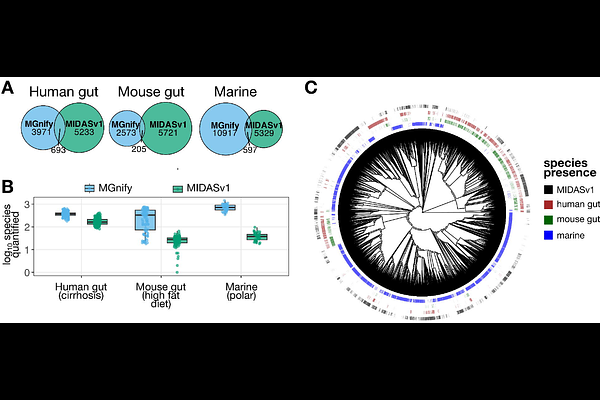
AbstractIn microbiome studies, associations between microbial functions and the environment are often confounded by phylogeny. While some methods explicitly account for this confounder, they require information about genome content, limiting their use in biomes where few genomes have been available. To make these methods more universally accessible, we have developed Phylogenize2, a redesigned phylogeny-aware tool for linking microbial gene families to abundance phenotypes. Phylogenize2 integrates large metagenome-assembled genome collections, including both biome-specific collections from MGnify and a broadly sampled general purpose database, GlobDB, to substantially expand species coverage, allowing its application in environments like the mouse gut and ocean. In addition, by default, Phylogenize2 uses a new robust phylogenetic testing framework that has been optimized for microbial abundance data, while also allowing the use of other comparative methods such as POMS. In an experimental mouse study, Phylogenize2 identifies that Muribaculaceae with higher abundance on a high-fat diet are enriched for proteins in the thioredoxin family, with likely roles in oxidative stress. When we apply Phylogenize2 to a polar ocean study, we find that a molybdenum-dependent PaoABC/YagTSR-like aldehyde oxidoreductase system differentiates mesopelagic from surface-dwelling Flavobacteriaceae, suggesting that aldehyde detoxification may be important for organisms that degrade marine snow. Together, these results show that Phylogenize2 expands phylogeny-aware microbiome analysis beyond the human gut and can provide insight into the genetic basis of microbiome-encoded traits in diverse environments.