Development of Faster and More Accurate Supernova Localization at Super-Kamiokande

Development of Faster and More Accurate Supernova Localization at Super-Kamiokande
K. Abe, Y. Asaoka, M. Harada, Y. Hayato, K. Hiraide, K. Hosokawa, T. H. Hung, K. Ieki, M. Ikeda, J. Kameda, Y. Kanemura, Y. Kataoka, S. Miki, S. Mine, M. Miura, S. Moriyama, K. Nakagiri, M. Nakahata, S. Nakayama, Y. Noguchi, G. Pronost, K. Sato, H. Sekiya, K. Shimizu, R. Shinoda, M. Shiozawa, Y. Suzuki, A. Takeda, Y. Takemoto, H. Tanaka, T. Yano, S. Chen, Y. Itow, T. Kajita, R. Nishijima, K. Okumura, T. Tashiro, T. Tomiya, X. Wang, P. Fernandez, L. Labarga, D. Samudio, B. Zaldivar, C. Yanagisawa, B. Jargowsky, E. Kearns, J. Mirabito, L. Wan, T. Wester, B. W. Pointon, J. Bian, B. Cortez, N. J. Griskevich, Y. Jiang, M. B. Smy, H. W. Sobel, V. Takhistov, A. Yankelevich, J. Hill, M. C. Jang, S. H. Lee, D. H. Moon, R. G. Park, B. S. Yang, B. Bodur, K. Scholberg, C. W. Walter, A. Beauchêne, O. Drapier, A. Ershova, M. Ferey, E. Le Blévec, Th. A. Mueller, P. Paganini, C. Quach, R. Rogly, T. Nakamura, J. S. Jang, R. P. Litchfield, L. N. Machado, F. J. P. Soler, J. G. Learned, K. Choi, N. Iovine, S. Cao, L. H. V. Anthony, D. Martin, N. W. Prouse, M. Scott, Y. Uchida, V. Berardi, N. F. Calabria, M. G. Catanesi, N. Ospina, E. Radicioni, A. Langella, G. De Rosa, G. Collazuol, M. Feltre, M. Mattiazzi, L. Ludovici, M. Gonin, L. Périssé, B. Quilain, S. Horiuchi, A. Kawabata, M. Kobayashi, Y. M. Liu, Y. Maekawa, Y. Nishimura, R. Okazaki, R. Akutsu, M. Friend, T. Hasegawa, Y. Hino, T. Ishida, T. Kobayashi, M. Jakkapu, T. Matsubara, T. Nakadaira, K. Nakamura, Y. Oyama, A. Portocarrero Yrey, K. Sakashita, T. Sekiguchi, T. Tsukamoto, N. Bhuiyan, G. T. Burton, F. Di Lodovico, J. Gao, A. Goldsack, T. Katori, R. Kralik, N. Latham, J. Migenda, R. M. Ramsden, S. Zsoldos, H. Ito, T. Sone, A. T. Suzuki, Y. Takagi, Y. Takeuchi, S. Wada, H. Zhong, J. Feng, L. Feng, S. Han, J. Hikida, J. R. Hu, Z. Hu, M. Kawaue, T. Kikawa, T. Nakaya, T. V. Ngoc, R. A. Wendell, K. Yasutome, S. J. Jenkins, N. McCauley, P. Mehta, A. Tarrant, M. Fanì, M. J. Wilking, Z. Xie, Y. Fukuda, H. Menjo, Y. Yoshioka, J. Lagoda, M. Mandal, J. Zalipska, M. Mori, M. Jia, J. Jiang, W. Shi, K. Hamaguchi, H. Ishino, Y. Koshio, F. Nakanishi, S. Sakai, T. Tada, T. Tano, T. Ishizuka, G. Barr, D. Barrow, L. Cook, S. Samani, D. Wark, A. Holin, F. Nova, S. Jung, J. Y. Yang, J. Yoo, J. E. P. Fannon, L. Kneale, M. Malek, J. M. McElwee, T. Peacock, P. Stowell, M. D. Thiesse, L. F. Thompson, S. T. Wilson, H. Okazawa, S. M. Lakshmi, E. Kwon, M. W. Lee, J. W. Seo, I. Yu, Y. Ashida, A. K. Ichikawa, K. D. Nakamura, S. Tairafune, S. Abe, A. Eguchi, S. Goto, S. Kodama, Y. Kong, H. Hayasaki, Y. Masaki, Y. Mizuno, T. Muro, Y. Nakajima, N. Taniuchi, E. Watanabe, M. Yokoyama, P. de Perio, S. Fujita, C. Jesús-Valls, K. Martens, Ll. Marti, A. D. Santos, K. M. Tsui, M. R. Vagins, J. Xia, S. Izumiyama, M. Kuze, R. Matsumoto, K. Terada, R. Asaka, M. Ishitsuka, M. Shinoki, M. Sugo, M. Wako, K. Yamauchi, T. Yoshida, Y. Nakano, F. Cormier, R. Gaur, V. Gousy-Leblanc, M. Hartz, A. Konaka, X. Li, B. R. Smithers, S. Chen, Y. Wu, B. D. Xu, A. Q. Zhang, B. Zhang, H. Adhikary, M. Girgus, P. Govindaraj, M. Posiadala-Zezula, Y. S. Prabhu, S. B. Boyd, R. Edwards, D. Hadley, M. Nicholson, M. O'Flaherty, B. Richards, A. Ali, B. Jamieson, S. Amanai, C. Bronner, D. Horiguchi, A. Minamino, Y. Sasaki, R. Shibayama, R. Shimamura
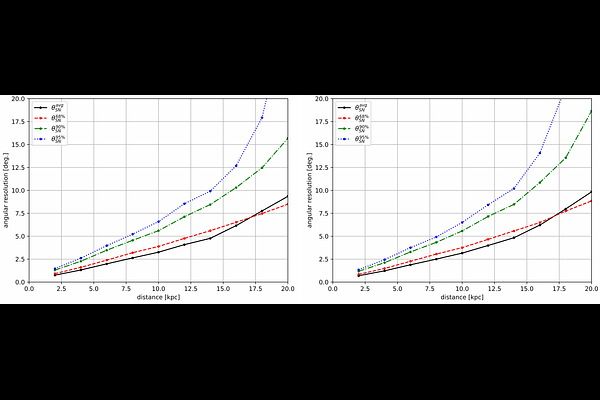
AbstractThe next nearby core-collapse supernova (SN) promises to yield a treasure of scientific information through multi-messenger astronomy. Early observations of the shock breakout (SBO) emissions are especially critical to understand the SN explosive mechanism as well as the properties of the progenitor star. Neutrino observatories are able to provide an early alert of a SN before the arrival of the SBO radiation. Super-Kamiokande (SK) has the unique capability to independently reconstruct an accurate SN pointing direction as part of its real-time monitoring system, ``SNWATCH.'' Recent upgrades to SK by adding gadolinium (Gd) to the detection volume have been accompanied by efforts to improve the speed and accuracy of SN direction reconstruction. A new, novel HEALPix-based approach (``HP-Fitter'') can calculate the SN direction from the reconstructed burst event directions in less than one second. As well, the previous maximum-likelihood direction fitter (``ML-Fitter'') was upgraded by incorporating event information from Gd neutron-capture as well as using the HP-Fitter for the initial fit parameters and from code refactoring and optimization. The improved ML-Fitter has better angular resolution but direction reconstruction time is $\mathcal{O}$(sec). Together with improvements in burst detection and event reconstruction times, SNWATCH is now able to generate an SN alert with pointing information in about 90 seconds. These upgrades have been implemented at SK and integrated into a new automated system to provide GCN notices.