Cellector: A tool to detect foreign genotype cells in scRNAseq data with applications in leukemia and microchimerism.

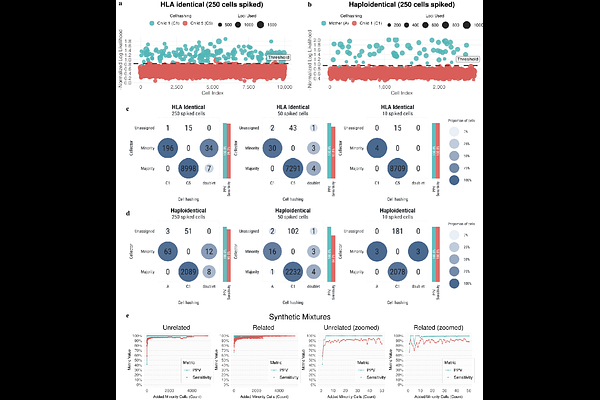
Cellector: A tool to detect foreign genotype cells in scRNAseq data with applications in leukemia and microchimerism.
Heaton, H.; Behboudi, R.; Ward, C.; Weerakoon, M.; Kanaan, S.; Reichle, S.; Hunter, N.; Furlan, S.
AbstractThe existence of rare, genetically distinct cells can occur in various samples such as transplant patients, naturally occurring microchimerism between maternal and fetal tissues, and cancer samples with sufficient mutational burden. Computational methods for detecting these foreign cells are vital to studying these biological conditions. An application that is of particular interest is that of leukemia patients post hematopoietic cell transplant (HCT) In many leukemias, a primary therapy is HCT, after which, the primary genotype of the bone marrow and blood cells should be of donor origin. If cells exist that are of the patient's genotype and the cell type lineage of the particular leukemia, this is known as measurable residual disease (MRD). If the MRD is high enough, this may represent a relapse of the patient's leukemia. Furthermore, accurately estimating the MRD is important for driving clinical decision making for these patients. Here we present Cellector, a computational method for identifying rare foreign genotype cells in single cell RNAseq (scRNAseq) datasets. We show Cellector accurately detects microchimeric cells down to an exceedingly low percentage of the cells present (0.05% or lower).