A peptide-based screen for cell death inhibitors identifies the cytoprotective compound CDL36

A peptide-based screen for cell death inhibitors identifies the cytoprotective compound CDL36
Inde, Z.; Keppler, S.; Gelles, J. D.; Fraser, C.; Presser, A.; Mohammed, J.; Jung, M.; Garvey, D. S.; Moldoveanu, T.; Chipuk, J. E.; Sarosiek, K. A.
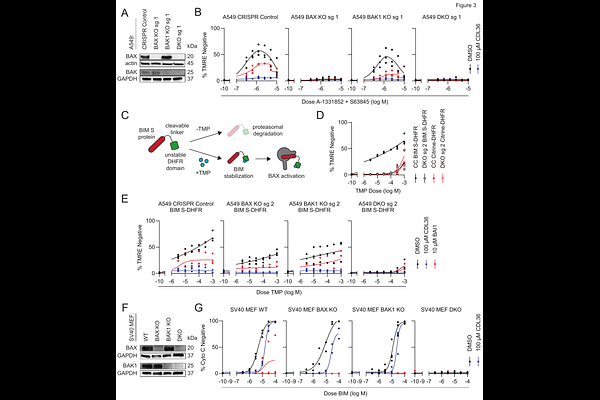
AbstractSmall molecule inhibitors of cell death have wide-ranging potential applications, both as tool compounds in the laboratory and as clinical modulators of pathologic cell death. Previous screening efforts have identified candidate compounds targeting the pro-apoptotic, pore-forming BCL-2 family proteins BAX and BAK, but the complex interactions of these proteins at the mitochondrial outer membrane (with other proteins and the membrane itself) present challenges for compound screening. Although no inhibitors of BAX or BAK have advanced to clinical testing to date, candidate inhibitors have thus far been identified via screening of membrane-containing systems such as liposomes and isolated mitochondria. To address some of the challenges of chemical screening for apoptosis inhibitors, we conducted a small molecule screen utilizing BH3 profiling, a method that quantifies mitochondrial outer membrane permeabilization (MOMP) upon treatment with pro-apoptotic peptides derived from BCL-2 family proteins. Of over 40,000 compounds screened, we identified a series of compounds that prevent MOMP in response to pro-apoptotic peptides. The most potent of these, CDL36, binds to BAX and prevents MOMP at early timepoints. In longer term viability assays, the cytoprotective effect of CDL36 is most potent against death induced by doxorubicin, a widely used chemotherapeutic agent that causes dose-limiting cardiovascular toxicity. Our results elucidate the mechanism of action of new and existing cell death inhibitors, providing a foundation for further development of these inhibitors and potential insights into the mechanisms mediating doxorubicin toxicity in patients.