Engineered trophoblast organoids recapitulate molecular and functional features of preeclampsia

Engineered trophoblast organoids recapitulate molecular and functional features of preeclampsia
Arthurs, A. L.; Lushington, C.; Medina Garcia, D. L.; Merriman, A. L.; Mora-Roldan, G. A.; Parry, L.; Boparai, A.; Polo, J. M.; Adikusuma, F. L.; Thomas, P. Q.; Roberts, C. T.
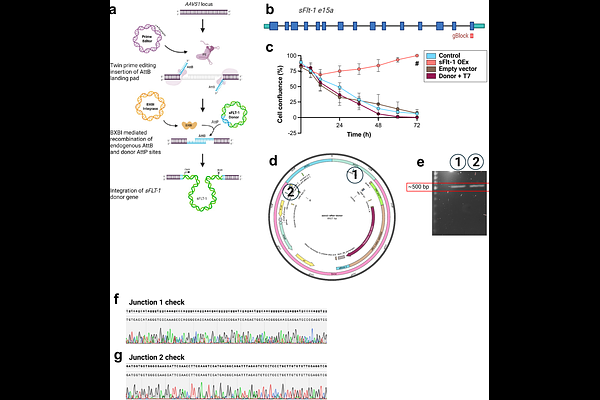
AbstractPreeclampsia is a major pregnancy complication driven by placental dysfunction, yet research is limited by reliance on patient-derived tissues and models that do not fully capture human disease. Here, we develop a genetically engineered human trophoblast organoid model of preeclampsia that can be generated without access to placental tissue. Using a CRISPR-based Prime Integrase strategy, we engineered induced trophoblast stem cells to express the preeclampsia-associated soluble fms-like tyrosine kinase-1 (sFlt-1) exon 15a isoform. Engineered organoids showed a transcriptional shift towards primary preeclamptic placentae and developed several features of disease. These included reduced PlGF, increased IL-6 and soluble endoglin, oxidative stress, impaired growth and an elevated sFlt-1/PlGF ratio comparable to primary preeclamptic trophoblast organoids. These broader changes were not reproduced by adding recombinant human sFlt-1 to control organoids. Conditioned media from engineered organoids impaired endothelial network formation, demonstrating a functional effect of the altered trophoblast secretome. Treatment with sulfasalazine and metformin also restored angiogenic balance and organoid growth. Together, these findings establish a tractable human model that reproduces molecular and functional features of preeclampsia and provides a platform to study disease mechanisms and test potential therapies.