High relatedness in sexually produced restoration cohorts of the endangered elkhorn coral, Acropora palmata

High relatedness in sexually produced restoration cohorts of the endangered elkhorn coral, Acropora palmata
Kenkel, C. D.; Elder, H.; McDermott, G.; Conn, T.; Locatelli, N. S.; Baums, I.; Klepac, C.; Craig, Z.; Merck, D.; Winters, R. S.; Miller, M.; Williams, D.; Muller, E. M.
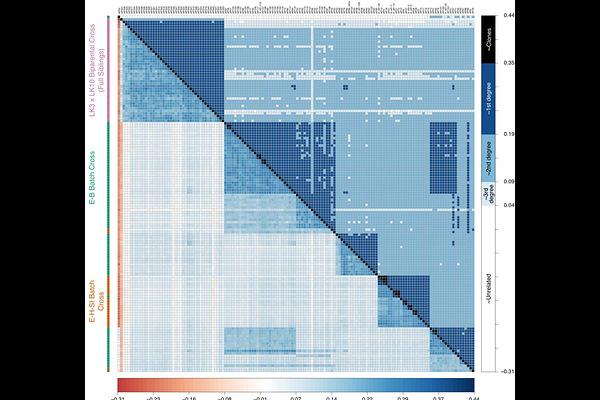
AbstractClimate change is driving the decline of coral populations around the world such that many are unlikely to recover without human intervention. Assisted sexual reproduction is one intervention proposed to enhance genetic diversity and support population recovery, yet its genetic outcomes remain poorly quantified. We evaluated genome-wide relatedness and genetic diversity in 168 restoration genets of the endangered Caribbean coral Acropora palmata, including 153 sexually produced offspring derived from multi-parent batch and biparental crosses. We detected high relatedness within multi-parent batch cross cohorts, with many genets comprising only one or a few full-sibling groups, indicating highly unequal parental contributions. Nucleotide diversity was lower in one batch cross cohort relative to founder populations, but the absolute difference was small and runs of homozygosity were relatively short indicating that inbreeding depression is not yet a concern. These patterns suggest that common larval propagation approaches can successfully generate large numbers of new genets but underscore the need to manage inbreeding risk, especially in small breeding stocks such as the Caribbean Acropora spp. Specifically, our results highlight the need for comprehensive genetic management to integrate assisted sexual reproduction into coral restoration, including parentage tracking, broodstock rotation, and relatedness-informed outplanting designs.