Spinal cord regeneration deploys adult molecular programs that do not recapitulate embryonic development

Spinal cord regeneration deploys adult molecular programs that do not recapitulate embryonic development
Xu, Y.; Zhang, W.; Zhou, L.; Mokalled, M.
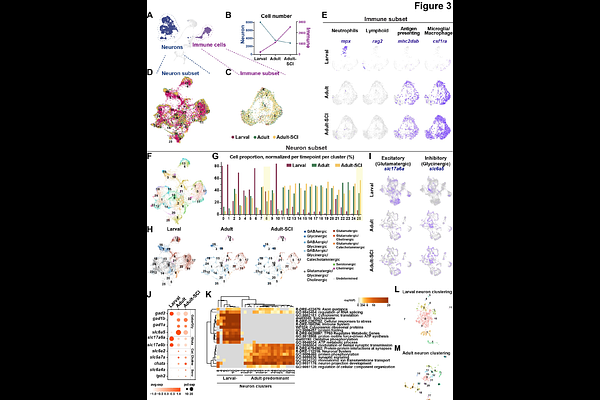
AbstractAdult zebrafish reverse paralysis after spinal cord injury. Their regenerative capacity is stem cell-dependent and often attributed to potent progenitors that retain embryonic radial glial features and reenact developmental programs after injury. To explore the extents to which regeneration recapitulates development, we integrated single-cell RNA-sequencing datasets spanning development, adult homeostasis and adult regeneration. We found immune cell maturation and neuronal differentiation extend into the juvenile stages, while only 25% of injury-responsive adult progenitors recapitulate larval progenitor identities. By annotating larval progenitors based on their dorso-ventral identities and chronological age, we inferred the spatio-temporal features of adult sox2+ progenitors. This analysis showed the dorso-ventral progenitor identities that guide spinal cord development are not faithfully maintained in homeostatic or regenerating adults. This study reports a genome-wide, single-cell examination of similarities and differences between development and regeneration and indicates adult tissue regeneration repurposes developmental pathways into newly acquired regenerative functions rather than recapitulating development.