A eutherian-specific metaviral gene, RTL6, coordinates microglial inflammatory responsiveness and state regulation

A eutherian-specific metaviral gene, RTL6, coordinates microglial inflammatory responsiveness and state regulation
Ishino, F.; Irie, M.; Shiura, H.; Kohda, T.; Kaneko-Ishino, T.
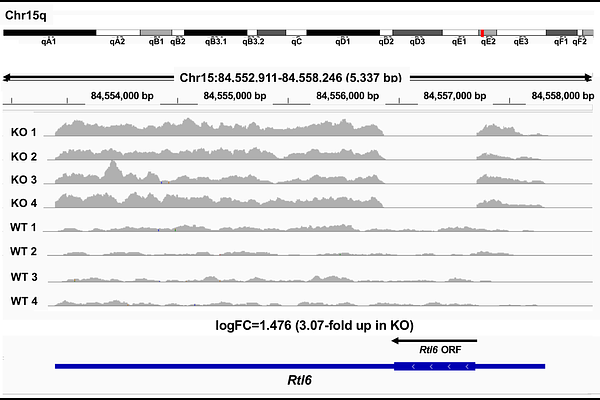
AbstractRTL6 (also known as SIRH3) is a eutherian-specific metavirus-derived gene highly conserved among placental mammals. We previously demonstrated that RTL6 is expressed in microglia and secreted into the brain extracellular space, where it mediates the trapping and clearance of bacterial lipopolysaccharide (LPS). However, its role in microglial TLR4 signaling remained unclear. To investigate the earliest LPS response, we performed RNA-seq analysis of wild-type and Rtl6-deficient primary microglia following 10 min of LPS stimulation. Rtl6-deficient microglia exhibited compensatory upregulation of residual transcripts derived from the untranslated region of Rtl6, suggesting feedback regulation of Rtl6 expression. Loss of RTL6 attenuated the induction of immediate-early response genes, including Fos, Jun, Nr4a1, Nr4a2, Egr2, and Egr3, together with broad suppression of interferon-responsive and inflammatory transcriptional programs. Altered neuronal and oligodendrocyte/myelin interaction pathways indicated remodeling of microglial communication networks. Strikingly, genes involved in cell-cycle progression, DNA replication, chromatin assembly, DNA repair, and genome maintenance were coordinately upregulated, including multiple disease-associated microglia (DAM)-related genes. Collectively, these findings indicate that RTL6 couples extracellular LPS sensing to inflammatory transcriptional responses while regulating microglial functional state transitions. Our results identify RTL6 as a previously unrecognized component of the regulatory network governing microglial functional states in placental mammals.